Summer Science: 10 Cicada Activities for Kids
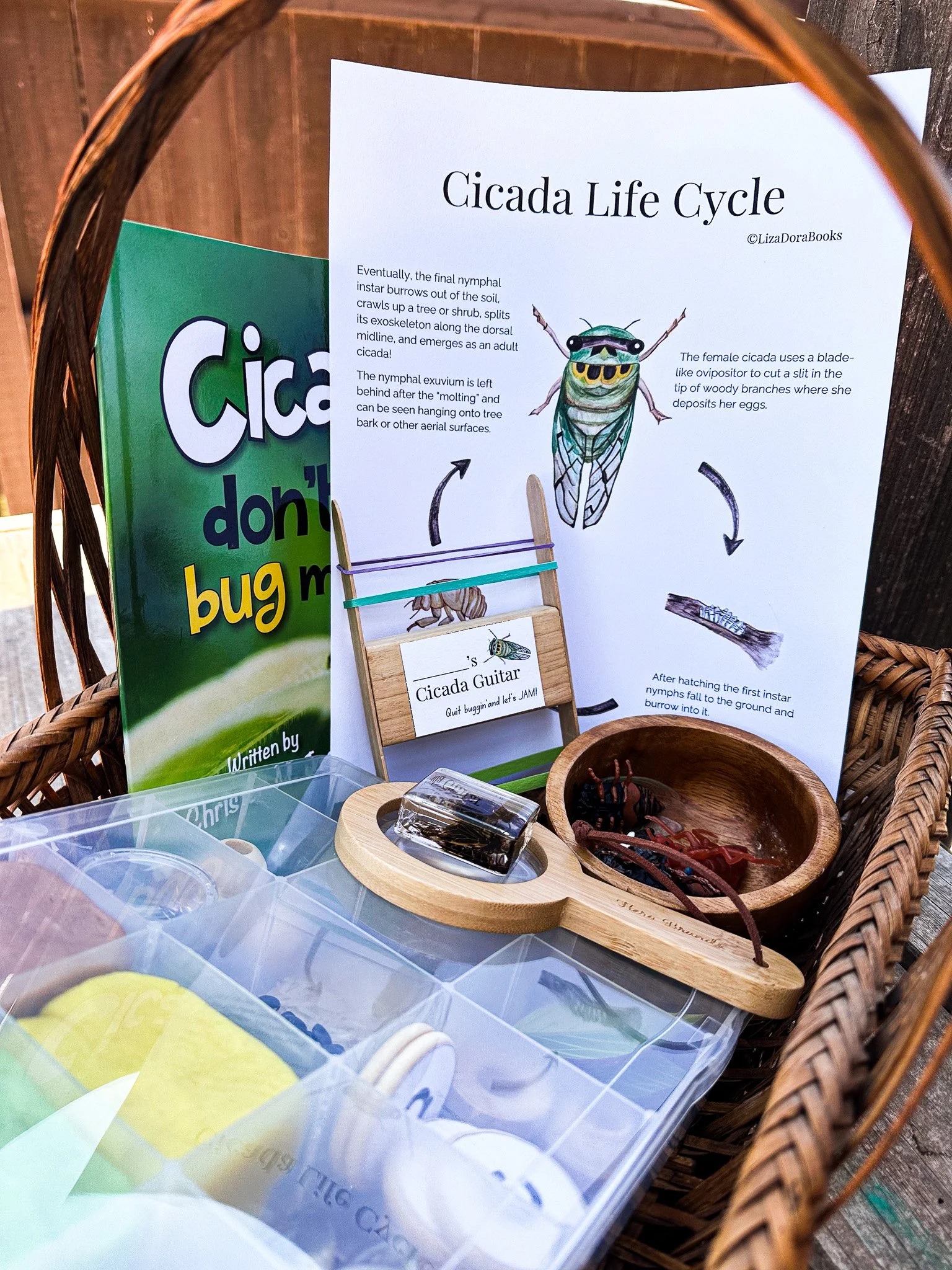
That first buzzing chorus of summer is basically a starting gun for curious kids. Cicadas are loud, weird, harmless, and everywhere, which makes them one of the easiest science topics to teach without anyone realizing they're learning.
Whether you homeschool year-round, teach preschool, or you're just looking for something to do besides screens on a hot afternoon, cicada activities check every box: science, art, literacy, math, and sensory play. Here are ten of our favorites, organized by age so you can jump straight to what fits your crew.
Outdoor Activities (All Ages)
1. Cicada Shell Scavenger Hunt
This one requires zero prep. Hand your kids a bucket and send them outside. During cicada season (roughly May through September in Texas and the southern U.S.), exoskeletons cling to tree trunks, fence posts, brick walls, and just about every surface within climbing distance of the soil.
What to do with the shells once they're collected:
Count them (math!). Sort them by size. Examine them under a magnifying glass. Talk about why the cicada left its shell behind, which leads naturally into a conversation about molting and metamorphosis. For older kids, try sketching the shells in a nature journal with colored pencils to practice observational drawing.
2. Sound Safari
Cicadas are among the loudest insects on Earth. Some species hit 100 decibels, roughly the same volume as a lawnmower running next to your ear. Take kids on a listening walk and challenge them to locate the sound source. Can they tell which tree the cicada is in? Can they hear the difference between species?
Bring a phone to record the sounds, then play them back inside. Younger kids love guessing games: "Was that a cicada or a cricket?" Older kids can research why only male cicadas "sing" and how they produce sound using a special membrane called a tymbal (not their wings, as most people assume).
3. Cicada Life Stage Observation
If you're lucky enough to spot a cicada mid-emergence, stop everything. Watching a nymph crawl out of its underground tunnel, climb a tree, and shed its exoskeleton is one of the most dramatic things you'll ever see in your own backyard. The whole process takes about an hour.
Even without catching the moment live, you can find nymphs, freshly molted adults (they're pale and soft before their wings harden), and mature adults all in the same area during peak season. Comparing the stages side by side makes life cycle concepts concrete in a way no worksheet can.
Printable Activities (Ages 2-6)
4. Life Cycle Sequencing Cards
Printable life cycle cards let even toddlers participate in science. The concept is simple: cards showing each stage of the cicada life cycle (egg, nymph, adult) that kids arrange in order. For two-year-olds, start with just three cards. For kindergartners, add detail cards showing underground feeding, molting, and wing development.
Montessori three-part nomenclature cards take this further by pairing each image with a label and a definition. Kids match all three components, building reading skills and science vocabulary at the same time.
5. Cicada Fact File Cards
Short illustrated cards with one cicada fact each are perfect for early readers. They work as independent reading practice, conversation starters at the dinner table, or a matching game where kids pair facts with pictures.
A good fact file set covers topics like anatomy, sound production, habitat, diet, and native species. Texas alone is home to multiple cicada species with different emergence patterns, which makes for great "Did you know?" moments with local connections.
6. Cicada-Themed Handwriting Practice
Letter tracing and handwriting pages don't have to be boring. When the practice words are "cicada," "nymph," "exoskeleton," and "tymbal," kids are learning science vocabulary while building fine motor skills. For older learners, cursive versions of the same words add an extra challenge.
STEM and Art Activities (Ages 3-10)
7. Build a Cicada Guitar
This is the activity that steals the show every single time. Here's the science behind it: cicadas don't make sound by rubbing their wings together like crickets. They vibrate a drum-like membrane called a tymbal, which produces that iconic buzzing. Kids can explore this concept by building their own simple string instrument using popsicle sticks and rubber bands.
Stretch rubber bands of different thicknesses across a frame and let kids pluck, strum, and experiment. Why does a thick rubber band sound different from a thin one? What happens when you stretch one tighter? You're teaching acoustics, vibration, tension, and the scientific method, and it feels like playing music.
8. Watercolor Cicada Observation Drawing
Give kids a real cicada shell (or a high-quality reference image) and watercolor paints. The goal isn't a perfect painting. It's looking closely enough to notice things: the veins in the wings, the segmented body, the tiny claws on the legs. Observation drawing builds attention to detail and patience, and the results are always surprisingly beautiful.
For younger kids, start with a pre-drawn outline they can paint. For older kids, challenge them to paint from the actual specimen. Watercolor is the perfect medium here because the translucent washes naturally mimic the way light passes through real cicada wings.
9. Cicada Anatomy Labeling
Print a large cicada diagram and let kids label the body parts: head, thorax, abdomen, compound eyes, antennae, wings, legs, tymbal. Younger kids can match pre-printed labels to the correct spots. Older kids can write the labels themselves and add brief definitions.
This activity pairs beautifully with the shell scavenger hunt. After labeling the diagram, kids go outside and try to identify the same structures on real exoskeletons. Making the connection between a 2D diagram and a 3D specimen is exactly the kind of thinking that builds real scientific literacy.
10. Cicada Math: Counting, Sorting, and Patterns
Cicadas are surprisingly math-friendly. Younger learners can count legs (always six, because cicadas are insects), sort collected shells by size, or use cicada picture cards for simple addition. Older kids can explore the math behind periodical cicada cycles: why do they emerge in intervals of 13 or 17 years? (Both prime numbers, which scientists believe helps them avoid syncing with predator populations. Math in nature!)
Pattern activities using cicada imagery work well for preschoolers building pre-math skills. AB patterns, AAB patterns, and size sequencing all get more engaging when the pictures show actual insects instead of colored blocks.
Getting All of This in One Place
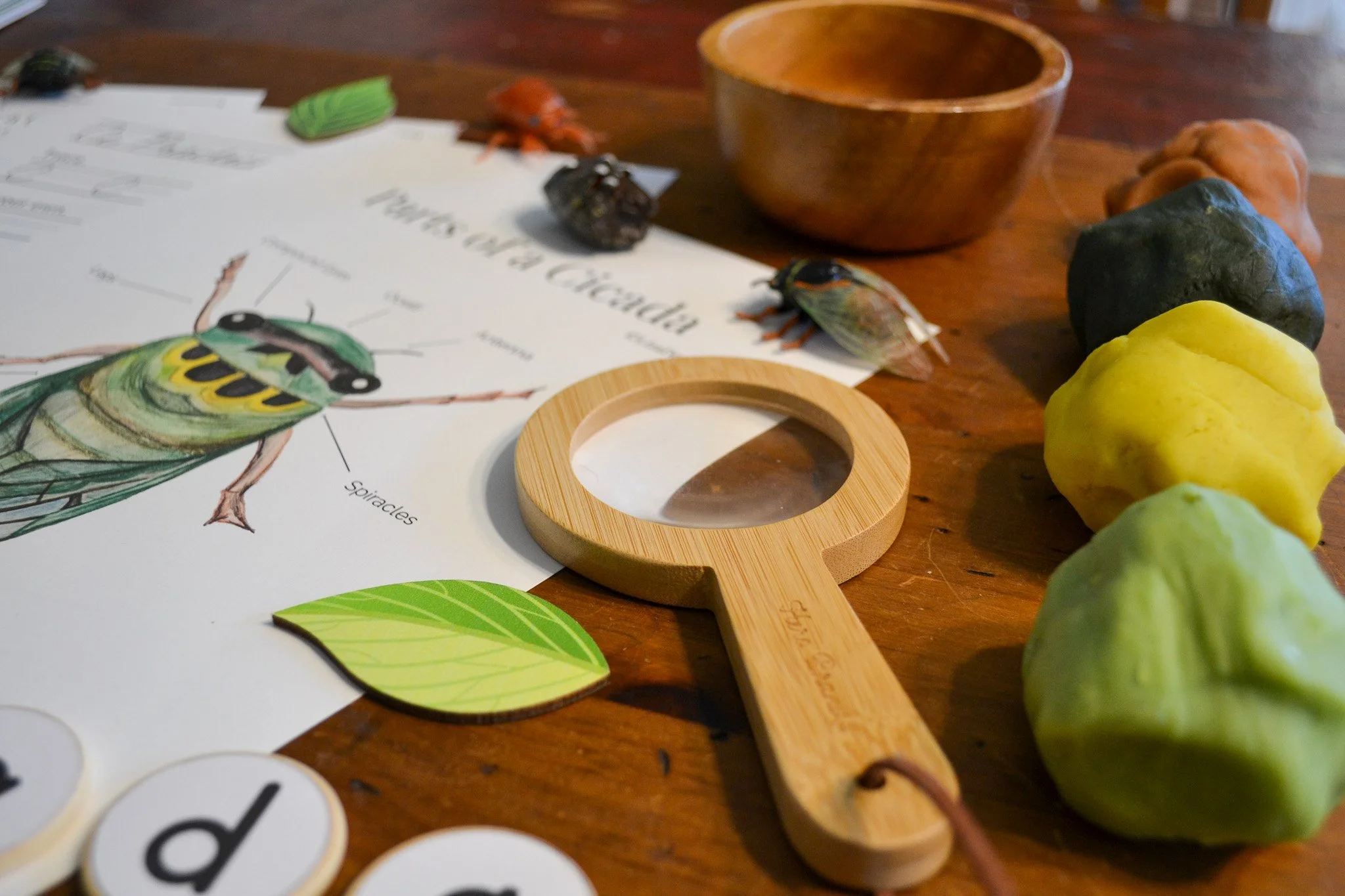
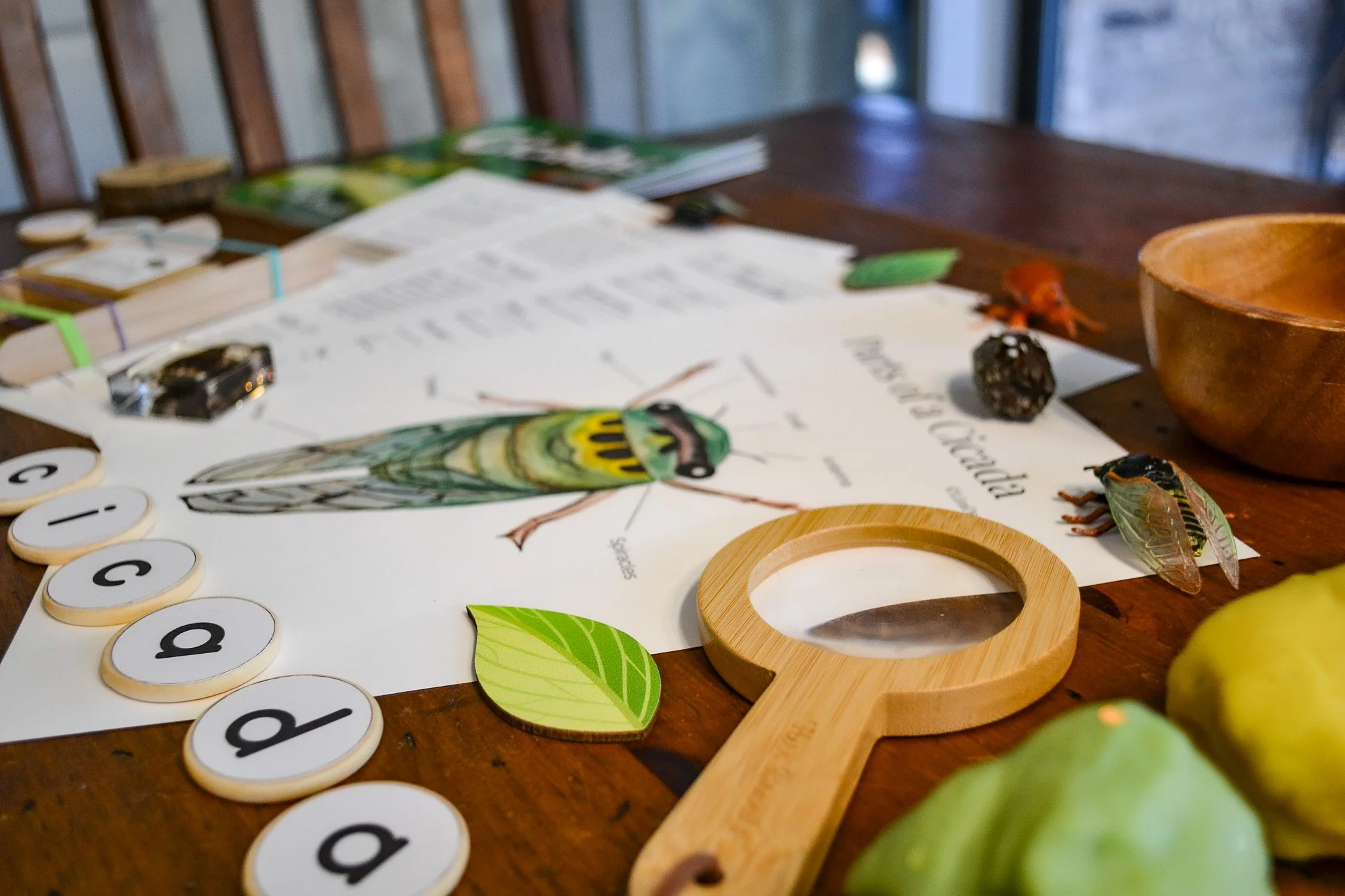
You can absolutely piece together a cicada unit from free resources, craft supplies, and backyard exploration. But if you want a complete, ready-to-print set of activities that covers life cycle science, anatomy, fact files, reading, math, literacy, art, music, and STEM, all illustrated in original hand-painted watercolor (not clip art), the Cicada Unit Study from Liza Dora Books packs 16 activities across 26 pages for ages 2 to 10.
It includes everything on this list in printable form, plus the Cicada Guitar STEM project, advanced vocabulary extensions for older learners, and Texas-native cicada species content. Print once, use unlimited times for your whole family or classroom.
Want to dive deeper into why cicada studies work so well across age groups? Read our full guide: Cicada Unit Study: Hands-On Science, Art, and STEM for Ages 2-10.
🦟 Cicada Unit Study | Original Watercolor Art | 16 Printable Activities for Ages 2–10
Hear that buzzing in the trees? That's cicada season calling — and this Cicada Unit Study turns the backyard soundtrack of summer into a complete, multi-subject learning adventure your kids will love.
With 16 beautifully illustrated printable activities spanning science, reading, math, literacy, art, and music, this unit study takes a single fascinating insect and explores it from every angle — life cycle, anatomy, sound science, predators, and even how to build your own cicada-inspired musical instrument.
What sets this unit study apart?
Every page features
original hand-painted watercolor artwork
of a Texas-native cicada species — the same stunning art quality you'll find in our Moon and Fall bundles. You'll see the adult cicada in brilliant greens and golds, the translucent nymph shell in delicate tans, and even the eggs on their woody branch. This is not clip art. This is real art that makes learning feel like an experience, not a worksheet.
But the real magic is in the depth. Your little entomologist won't just learn
what
a cicada looks like — they'll discover
why
cicadas molt (exoskeletons!),
who
eats them (everyone, apparently),
why
they lay hundreds of eggs, and
how
male cicadas produce their incredible sound using tymbal organs that vibrate up to 480 times per second. Then they'll take that science knowledge and
build their own Cicada Guitar
— a hands-on STEM craft using popsicle sticks and rubber bands that teaches resonance, vibration, and sound in a way kids never forget.
The
8 Cicada Fact File Cards
are packed with advanced science that keeps older kids engaged too — from the periodical Magicicada (which only emerges every 13 or 17 years!) to the Empress Cicada of Malaysia with an 8-inch wingspan, to the Cicada Hunter Wasps that paralyze their prey. And the
Advanced Cicada Vocabulary Extension
introduces real scientific terms like Arthropoda, Phylum, Periodicity, Xylem, and Resonance — perfect for stretching curious minds.
What makes this unit study special:
🎨
Original watercolor artwork throughout
— Hand-painted Texas-native cicada species on every page. No clip art anywhere.
🎸
Cicada Guitar Musical Craft
— A hands-on STEM project that connects cicada tymbal science to music, sound, and vibration
📊
8 Fact File Cards
— Real science including Magicicada periodicity, the loudest insect on record, and Cicada Hunter Wasps
🔬
Life cycle explored 3 ways
— Illustrated poster, fill-in cards, and multi-size cut-out coins
📖
Science-rich reading activities
— Why cicadas molt, predator food chains, egg-laying survival strategies, and the physics of sound
🧠
Advanced Vocabulary Extension
— 2 pages of scientific terms that stretch learning well beyond preschool (Arthropoda, Phylum, Chelicerates, Xylem, Exoskeleton, and more)
✏️
Print AND Cursive handwriting
— Both styles included, plus a Let's Spell activity
🎨
2 Coloring Pages
— Adult cicada and nymph, hand-drawn from the original watercolor art
📋
Curated resources page
— Book recommendations, videos, and hands-on product suggestions to extend the learning
The 16 Activities:
Cicada Lifecycle Poster (simple + detailed labeled versions)
Cicada Lifecycle Cards (fill-in activity)
Cicada Lifecycle Circle Cut-Outs (3 sizes + letter coins)
Parts of a Cicada Diagram (labeled watercolor)
(8) Cicada Fact File Cards
3 Reading Activities
Cc Handwriting Practice (Print)
Cc Handwriting Practice (Cursive)
Let's Spell Cicada
Advanced Cicada Vocabulary Extension
Cicada Counting Puzzle (1–10)
8.5x11" Cicada Art Print
Cicada Print
(2) Coloring Pages
Cicada Guitar Musical Craft
Cicada Unit Resources
Also Included:
Cover Page
— Beautiful watercolor cover for the complete unit
Regional Note
— The species depicted is native to Texas, but there are over 3,000 species worldwide! Your cicadas may look different — and that's part of the adventure.
"Hi Mom!" Letter
— A personal note from Liza about how her own family uses these activities
Who It's For:
This unit study works beautifully across a wide age range. Little ones (ages 2–4) will love the coloring pages, counting puzzle, art print, and cut-out coins. Preschoolers and kindergartners (ages 4–6) will dive into the life cycle activities, handwriting practice, spelling, and reading activities. And older kids (ages 6–10) will be fascinated by the fact file cards, advanced vocabulary, sound science, and the Cicada Guitar STEM craft. It's designed so big kids can read to little ones, everyone can color together, and there's truly no "right" way to use it.
Perfect for Montessori and Charlotte Mason homeschool families, nature study co-ops, preschool through elementary classrooms, summer learning programs, science centers, and morning tubs.
How It Works:
Purchase and download instantly
Print the activities you need (unlimited prints!)
Grab some crayons, scissors, popsicle sticks, and rubber bands — and start exploring!
No shipping wait. No subscription. Just download, print, and discover the incredible world of cicadas!
____________________________________________

Digital download. No product will be shipped.

Download is a high-quality PDF ready to print. Color print recommended. Some files arrive zipped — right-click (or use your Files app) to unzip/extract.

No refunds on digital downloads. If you have trouble with your order or download, contact support@lizadorabooks.com.

Featuring original artwork by Liza Dora. Materials may not be duplicated, distributed, or sold without express written permission from Liza Dora Books. Licensed for personal / household or single-classroom use (including one daycare group). For multi-classroom, school-wide, or district licensing, see /schools or email schools@lizadorabooks.com.More Screen-Free Learning
If your kids love nature-based activities, explore our other hand-painted printable bundles:
Moon Unit Study Bundle (18 activities, ages 2-6): moon phases, lunar tracking, STEM orbits project
Texas Wildflower 3-Part Cards (8 native species, ages 3-12): Montessori nomenclature cards with hand-painted botanical illustrations
Nature Counting Cards (3 sets, ages 3-6): wildflowers, acorns, and pumpkin seeds for hands-on math
Every product features original watercolor artwork, instant digital download, and unlimited printing.