How We Use Counting Cards
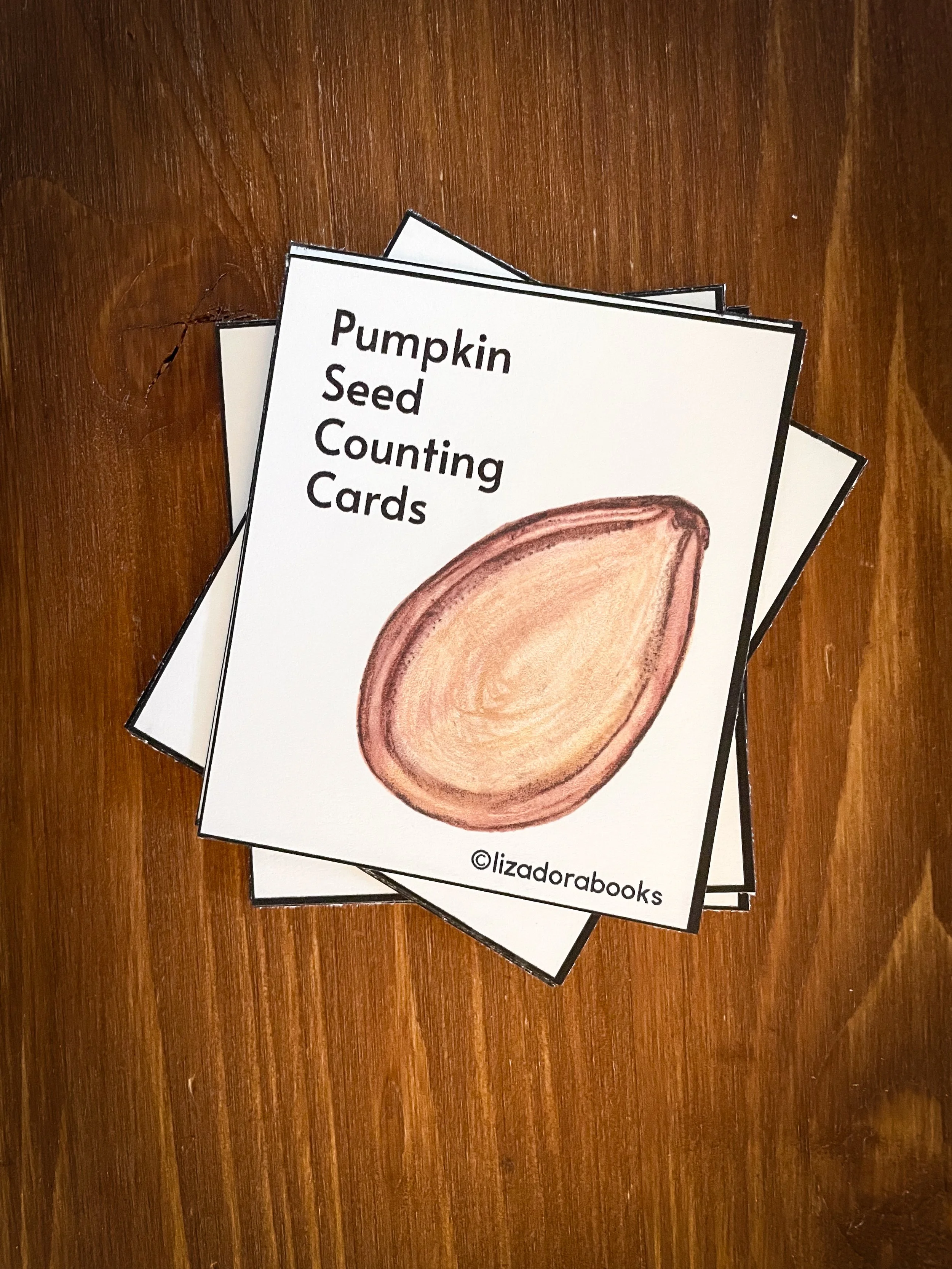
One of the questions we hear the most from parents and teachers is: “I love these cards, but how do I actually use them?”
The answer is one of our favorite things about counting cards. There is no single “right way” to use them! Counting cards are one of the most versatile math tools you can have on your shelf, and the best part is that your child will show you new ways to use them that you never even thought of.
Today we’re sharing all the ways we use our Nature Counting Cards at home. Whether you’re a homeschool family, a classroom teacher, or a parent looking for a simple screen-free activity, we hope these ideas spark some inspiration (and some great counting practice too!).
Start with a Tray
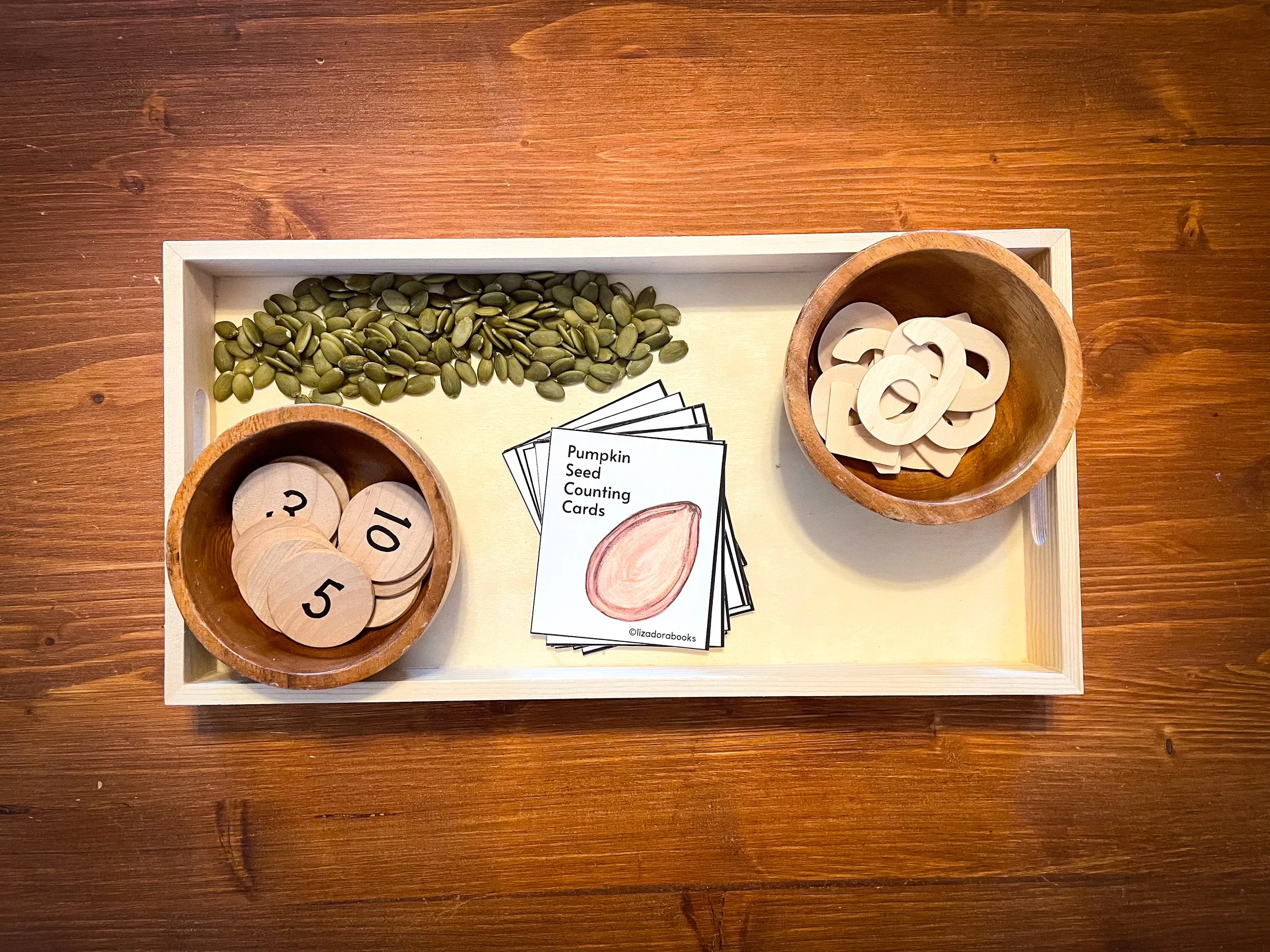
If you’re familiar with Montessori-style learning, you already know the magic of a well-prepared tray. Setting up a counting card activity on a tray gives your child a clear workspace and helps them focus on the task at hand.
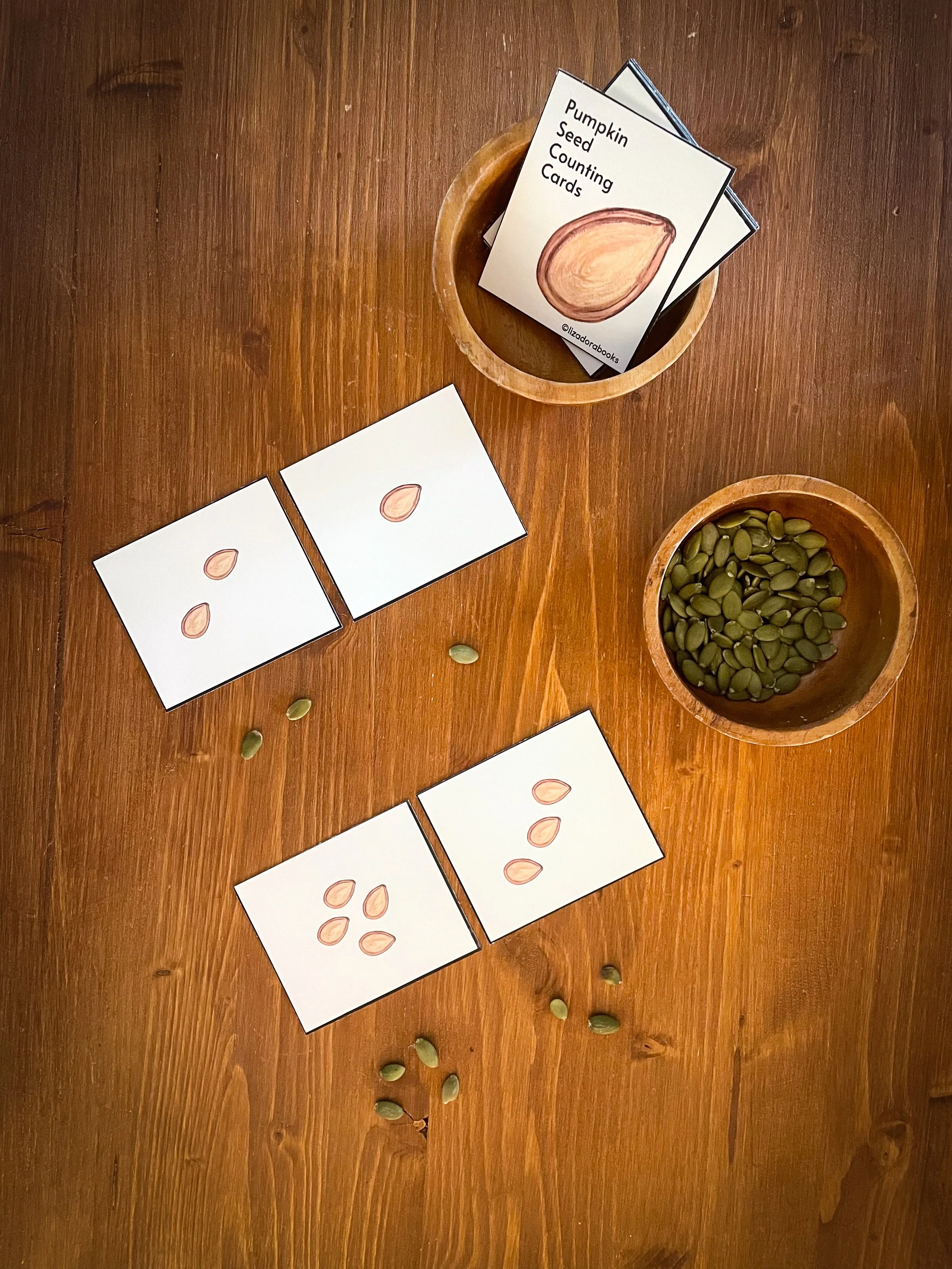
We love to keep it simple: one bowl of real pumpkin seeds (or acorns, buttons, small stones, whatever you have that they won’t eat!) and the stack of counting cards in the other bowl. That’s it. Place the tray on the table or on the floor and let your child explore.
The beauty of this setup is that it invites curiosity. Your child picks up a card, sees three pumpkin seeds illustrated on it, and then counts out three real seeds to match. They’re building one-to-one correspondence, connecting a printed image to a real object, and using their hands to make math concrete. That connection between the illustration and the real thing is so powerful for young learners, and it’s exactly why we use nature-based imagery on our cards.
Match Cards to Numbers
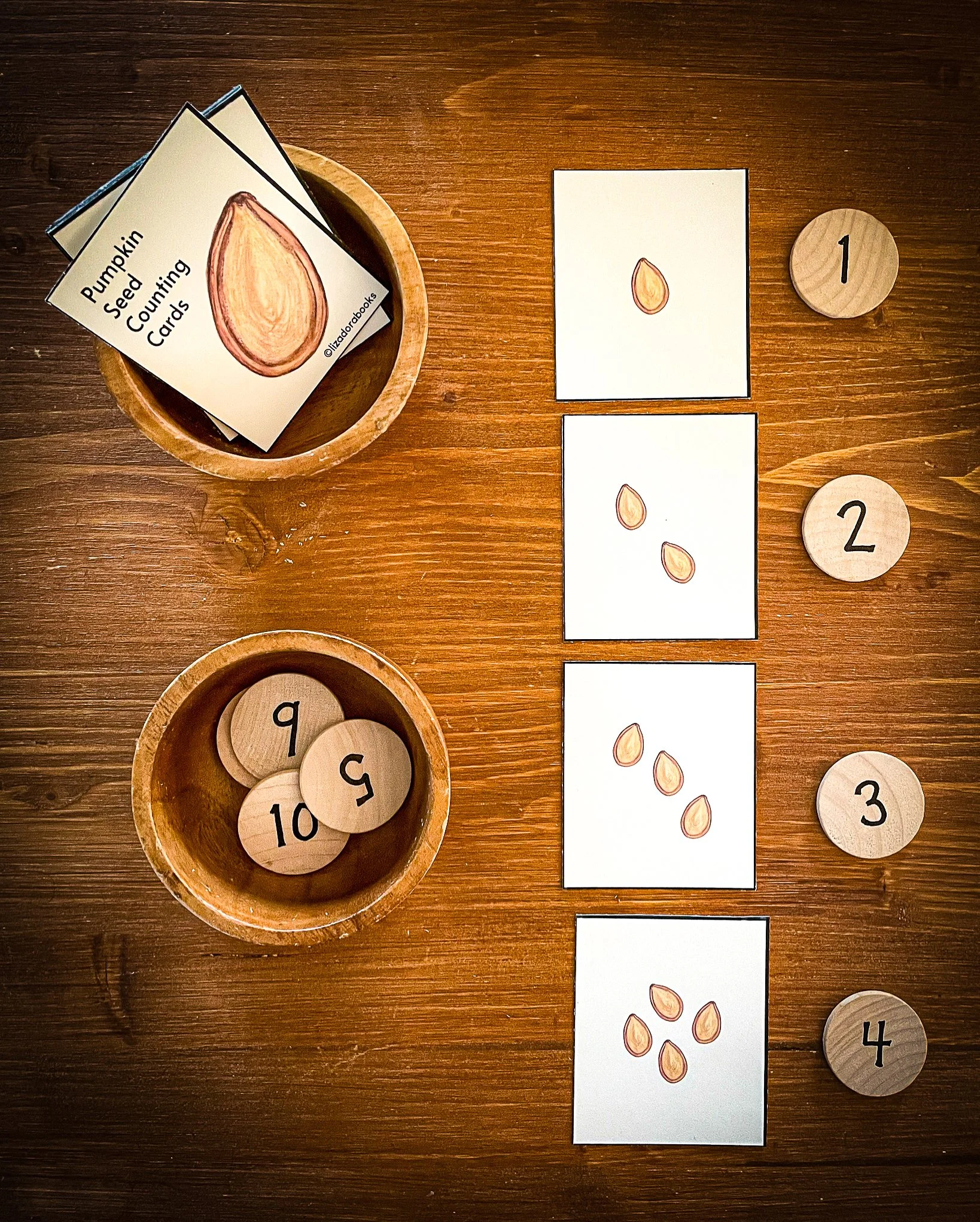
Once your child is comfortable with the cards on their own, try pairing them with number tokens or number tiles. Lay the cards out in a row or a column and invite your child to find the matching number for each card.
This is where number recognition really clicks. Your child is looking at a quantity (the illustrated seeds on the card), connecting it to the abstract symbol (the numeral), and placing them side by side. It’s a simple activity but it builds such an important bridge in their math understanding.
We use round wooden number tokens for this, but you could also use foam numbers, magnetic numbers, or even numbers written on small pieces of paper. Use what you have!
Try It with Wooden Numerals
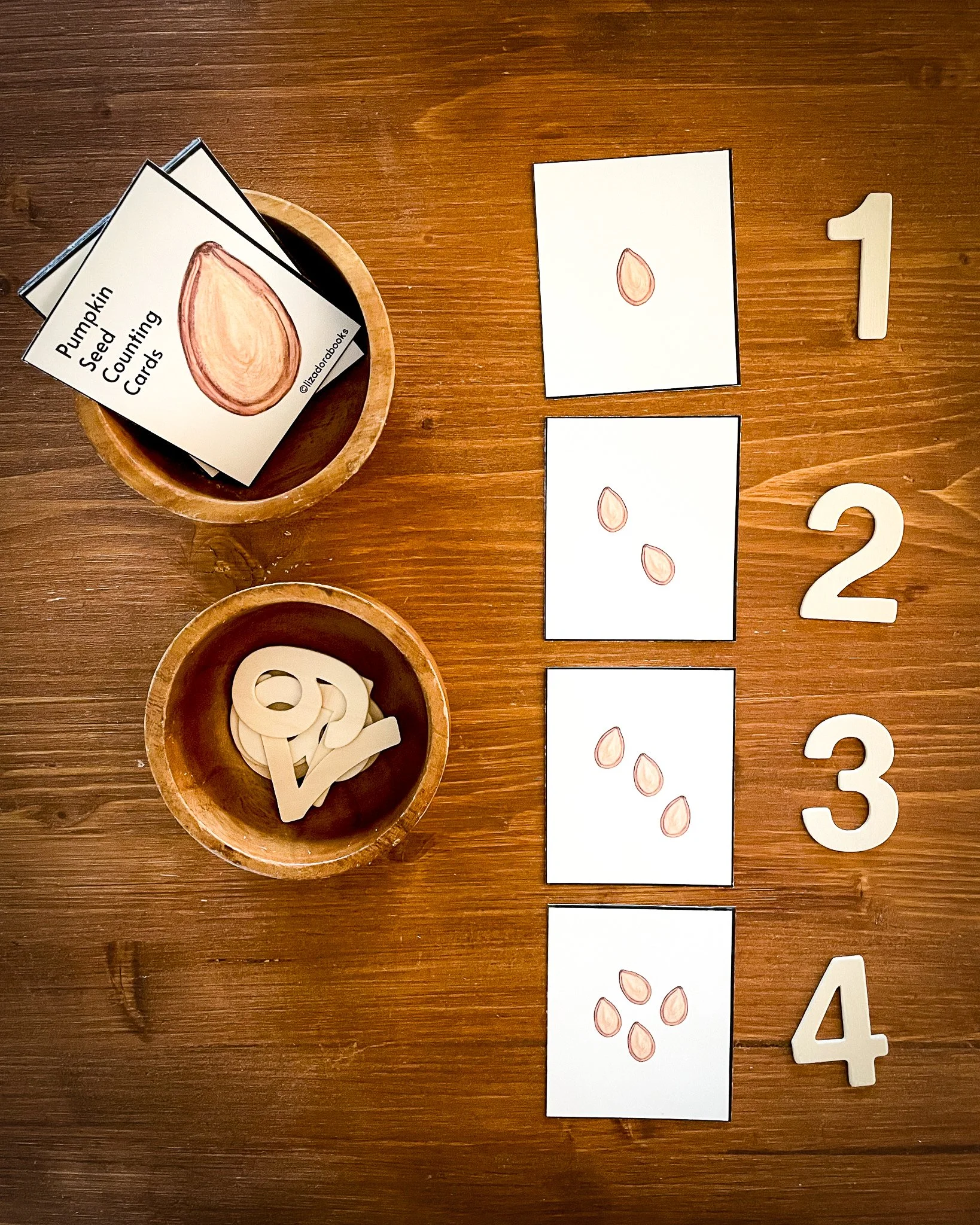
If you have wooden cut-out numerals (the kind you can find at most craft stores), these make a wonderful pairing with counting cards. The larger size of the numerals gives your child something substantial to hold and move, and the tactile experience of tracing the shape of a number with their fingers adds another layer of learning.
We like to put all the numerals in a wooden bowl and let our child pull them out one at a time, find the matching counting card, and place them together. It turns number matching into a little treasure hunt, and kids love it.
This setup is also great for working on number ordering. Can they put the cards and numerals in sequence from 1 to 10? What about starting from 10 and counting backwards? These small challenges keep the activity fresh and build confidence over time.
Count with Real Objects
This is where things get really exciting, especially for the little scientists in your life.
Take the counting cards outside or to the kitchen table and pair them with real objects from nature. Real pumpkin seeds with the Pumpkin Seed cards. Real acorns with the Acorn cards. Wildflowers picked from your yard (or pressed flowers from a nature walk!) with the Wildflower cards.
When your child counts out real pumpkin seeds to match the illustrated ones on the card, they’re not just practicing math. They’re observing, comparing, and making connections between art and the real world. “Do these seeds look the same as the ones on the card? How are they different? What do they feel like?” These are the kinds of questions that turn a simple counting activity into a science exploration.
We painted every card with watercolors using real specimens as reference, so the illustrations are as close to nature as we could make them. That means your child is actually studying real botanical details while they count. Science and math, working together, right there on your kitchen table.
Explore with Loose Parts
Loose parts are any small, open-ended materials your child can count, sort, stack, or arrange. Think buttons, glass gems, pom-poms, wooden beads, small stones, shells, or dried beans.
Place a counting card in front of your child and invite them to count out the right number of loose parts to match the card. This is wonderful for fine motor skills (picking up small objects and placing them carefully) and it gives your child a new sensory experience every time you switch materials.
You can also turn this into a sorting activity. Give your child a mixed bowl of loose parts and ask them to count out groups to match each card. Or let them choose which loose parts to use for each number. The possibilities are truly endless, and your child will surprise you with how creative they get.
Introduction to Addition and Subtraction
Once your child is confident with counting and number matching, counting cards become a gentle way to introduce early addition and subtraction concepts.
Try placing two cards side by side and asking, “If we have 2 pumpkin seeds and 3 pumpkin seeds, how many do we have altogether?” Your child can count the illustrated seeds across both cards to find the answer. No worksheets, no pressure, just counting pictures of seeds.
For subtraction, try it in reverse. “We have 5 acorns. If 2 acorns roll away, how many are left?” Let your child use the cards to find 5 and then count backwards, or physically cover up 2 of the seeds with their hand.
These are not formal math lessons. They’re playful conversations that plant the seeds (pun very much intended) for the math concepts your child will encounter later. And because the cards use familiar, natural images, the math never feels abstract or intimidating.
Make It Your Own
The ideas we’ve shared today are just a starting point. The real magic happens when your child picks up the cards and shows YOU how they want to use them. Maybe they’ll line them all up and tell you a story about the pumpkin seeds going on an adventure. Maybe they’ll sort them by quantity and announce that they’ve made a pattern. Maybe they’ll take them outside and try to find real wildflowers that match the ones on the cards.
That’s the beauty of open-ended, nature-based learning materials. They meet your child exactly where they are, and they grow with them.
Get the Bundle
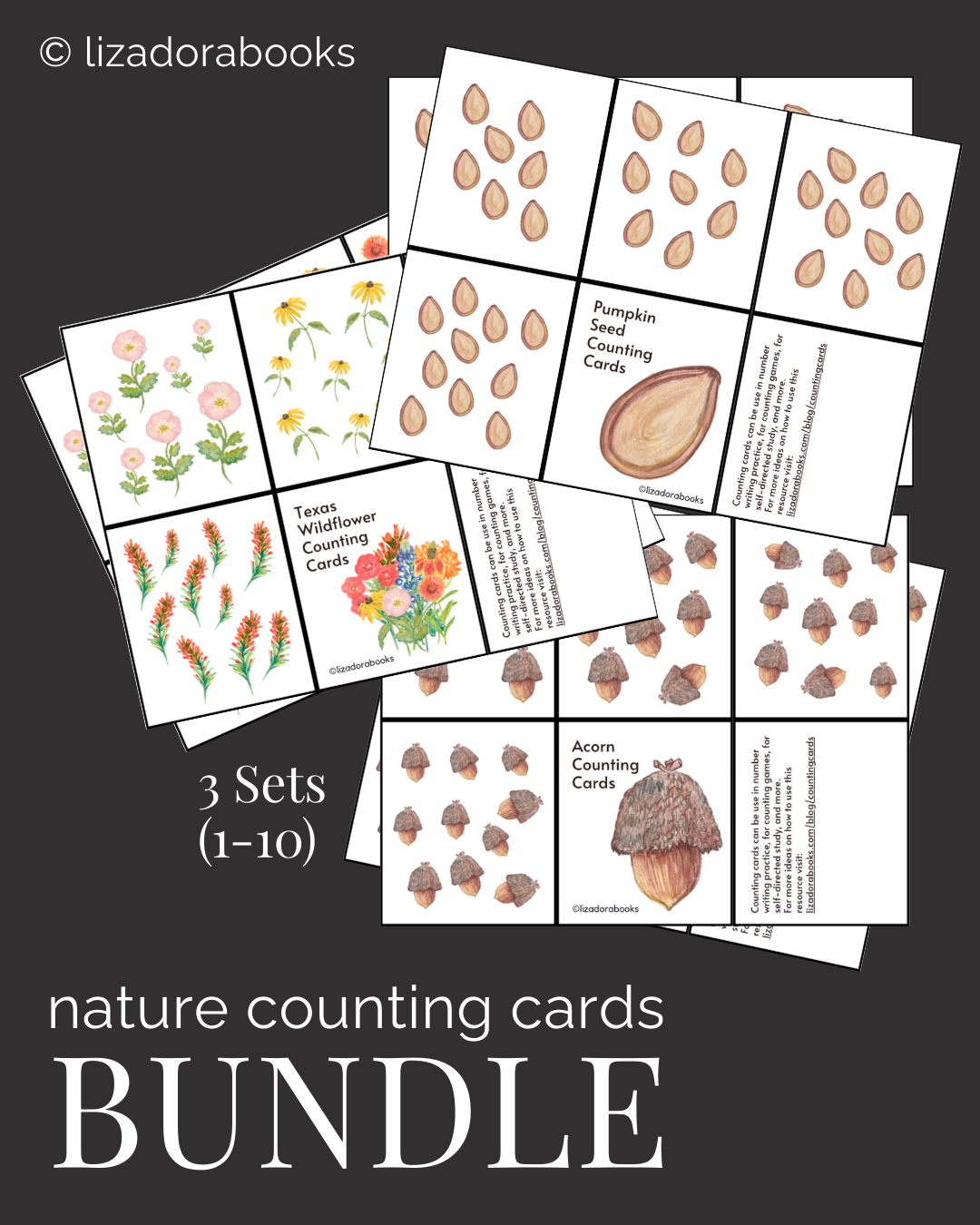
Our Nature Counting Cards Bundle includes three complete sets: Texas Wildflowers, Acorns, and Pumpkin Seeds. Every illustration is original, hand-painted watercolor artwork. Cards cover numbers 1 through 10 for each set, giving you 30 cards total.
It’s an instant digital download, so you can print them right away on cardstock and start counting today. We recommend laminating them for durability, especially if you’re using them with real seeds or loose parts!
Happy counting!
Counting just got a whole lot prettier.
This bundle includes three complete sets of counting cards, each featuring original hand-painted watercolor illustrations inspired by the natural world. Your little learner will count Texas Wildflowers, Acorns, and Pumpkin Seeds from 1 to 10, building number recognition and one-to-one correspondence through real, nature-based imagery.
What's Included:
Texas Wildflower Counting Cards (1–10)
Acorn Counting Cards (1–10)
Pumpkin Seed Counting Cards (1–10)
30 counting cards total across all three sets
Skills Your Child Will Practice:
Number recognition (1–10)
One-to-one correspondence
Counting and quantity
Sequencing and ordering
Early addition and subtraction concepts
So Many Ways to Use Them: Pair these cards with wooden numerals, number tokens, loose parts like buttons or gems, or even real pumpkin seeds and acorns from your own backyard! Set them up on a Montessori tray, spread them out on the floor, or bring them to the table for a simple math invitation.
Format:
Instant digital download (PDF)
Print on cardstock and cut for best results
Laminate for extra durability
Print as many copies as you need, forever
Perfect For: Montessori homeschool families, preschool and Pre-K classrooms, daycare providers, nature-loving parents, and anyone who wants to make math feel like an adventure.

Digital download. No product will be shipped.

Download is a high-quality PDF ready to print. Color print recommended. Some files arrive zipped — right-click (or use your Files app) to unzip/extract.

No refunds on digital downloads. If you have trouble with your order or download, contact support@lizadorabooks.com.

Featuring original artwork by Liza Dora. Materials may not be duplicated, distributed, or sold without express written permission from Liza Dora Books. Licensed for personal / household or single-classroom use (including one daycare group). For multi-classroom, school-wide, or district licensing, see /schools or email schools@lizadorabooks.com.