Cicada Unit Study: Hands-On Science, Art, and STEM for Ages 4–10
If your child has ever frozen mid-step to stare at a buzzing tree, you already know—cicadas are nature's perfect attention-grabber. That deafening summer chorus, the mysterious shells clinging to fence posts, the wild fact that some species live underground for seventeen years before emerging!
A cicada unit study turns that built-in curiosity into real learning. The best part? You don't need a textbook or a science degree. You just need a few printable activities, some crayons, and a kid who asks "why."
Here's how to build a cicada unit study that covers science, literacy, math, art, and music.
What Makes Cicadas So Fascinating to Kids?
Cicadas are one of the rare topics that hook every age group. A two-year-old will happily sort picture cards of cicada life stages. A seven-year-old will want to know how cicadas make that sound (spoiler: they vibrate a special membrane called a tymbal — not their wings). And a ten-year-old will be floored to learn that periodical cicadas spend 13 or 17 years underground before surfacing in synchronized broods of billions.
That range is what makes a cicada unit study so versatile. Whether you're homeschooling a single child or managing a mixed-age classroom, cicada activities can flex across developmental stages without anyone feeling bored or left behind.
A few cicada facts that spark great conversations with kids:
Cicadas are found on every continent except Antarctica.
Male cicadas are among the loudest insects on Earth — some species reach 100 decibels, as loud as a lawnmower.
Cicadas don't bite or sting. They're completely harmless to hold (great for reluctant bug-touchers!).
Texas alone is home to multiple native cicada species, each with its own emergence pattern.
Building a Cicada Unit Study: What to Include
Here's what a well-rounded cicada unit study might cover:
Life Cycle Science
The cicada life cycle—egg, nymph, and adult—is simple enough for a preschooler to sequence and detailed enough for an older child to compare with butterflies or frogs. Activities like life cycle sequencing cards, labeling diagrams, and matching games build observation and vocabulary at the same time.
For a Montessori approach, three-part nomenclature cards work beautifully here. The child matches the picture to the label to the definition, building reading skills and science vocabulary in one exercise.
Literacy and Language
Cicadas introduce fantastic vocabulary: exoskeleton, metamorphosis, nymph, tymbal, emergence. Younger learners can practice tracing and handwriting with cicada-themed letter pages, while older students can tackle advanced vocabulary extensions or write short research reports.
Fact file cards—short, illustrated cards with one cicada fact each—are perfect for early readers practicing independent reading and for older kids building note-taking skills.
Math and Patterns
Counting legs (six!), sorting cicadas by size, and tracking life cycle timelines all turn math into something tangible. Pattern recognition activities using cicada imagery help preschoolers build pre-math skills without worksheets that feel like worksheets.
Art and Creativity
This is where a cicada study really comes alive. Drawing cicadas from observation, painting life cycle stages, and creating cicada-themed crafts give kids a way to process what they've learned through their hands. When the artwork on the activities is beautiful—not generic clip art—kids engage differently. They want to color carefully. They notice details in the illustrations and look for them in real life.
Music and STEM: The Cicada Guitar
Here's a question most unit studies skip entirely: How do cicadas make sound?
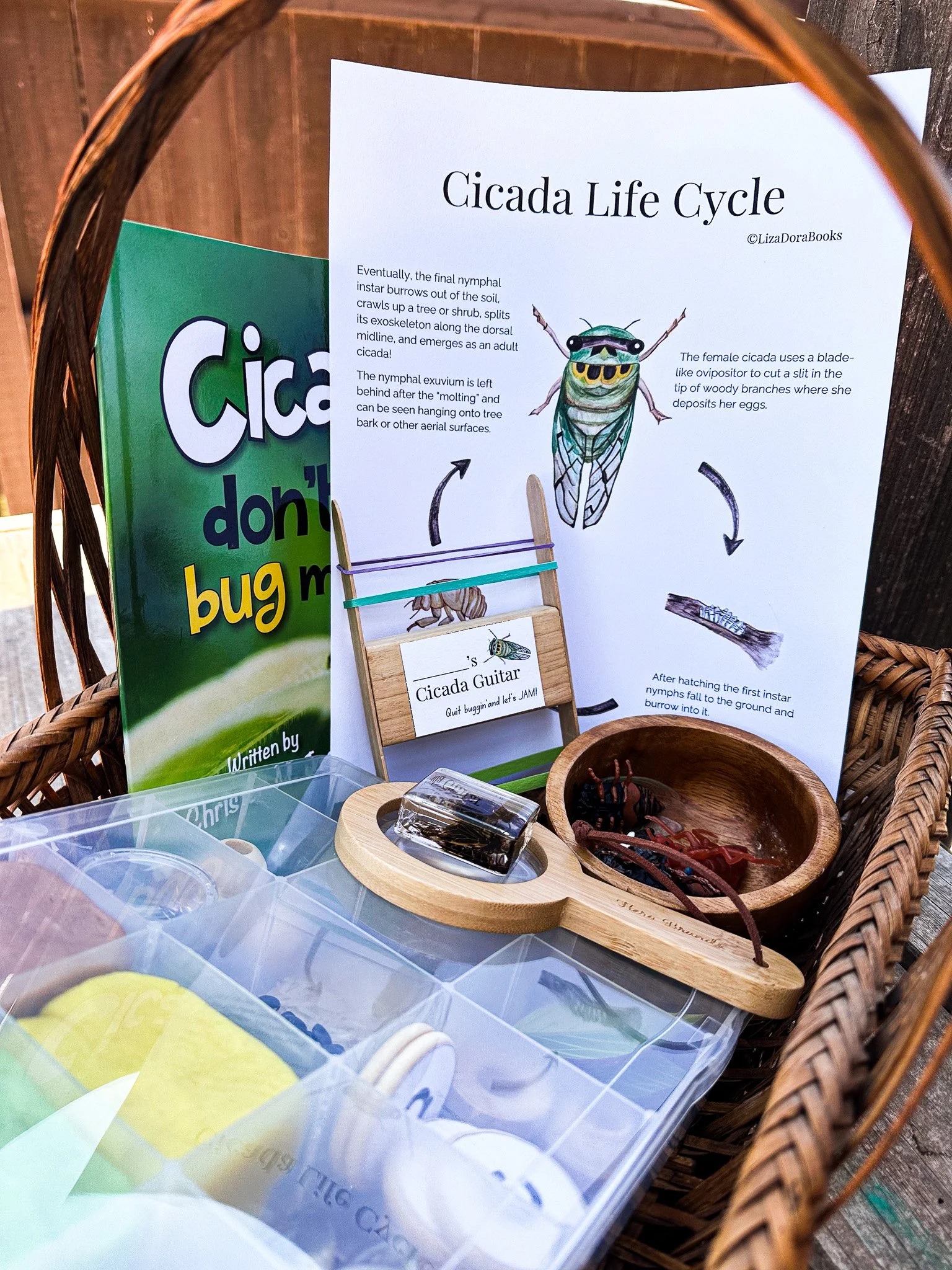
Cicadas produce their iconic buzzing by rapidly vibrating a drum-like membrane called a tymbal. Kids can explore this concept by building their own simple string instruments—we did popsicle sticks and rubber bands—and experimenting with how vibration creates sound. It's a STEM project disguised as music class, and it's usually the activity kids remember longest.
Why Watercolor Artwork Matters in Printable Activities
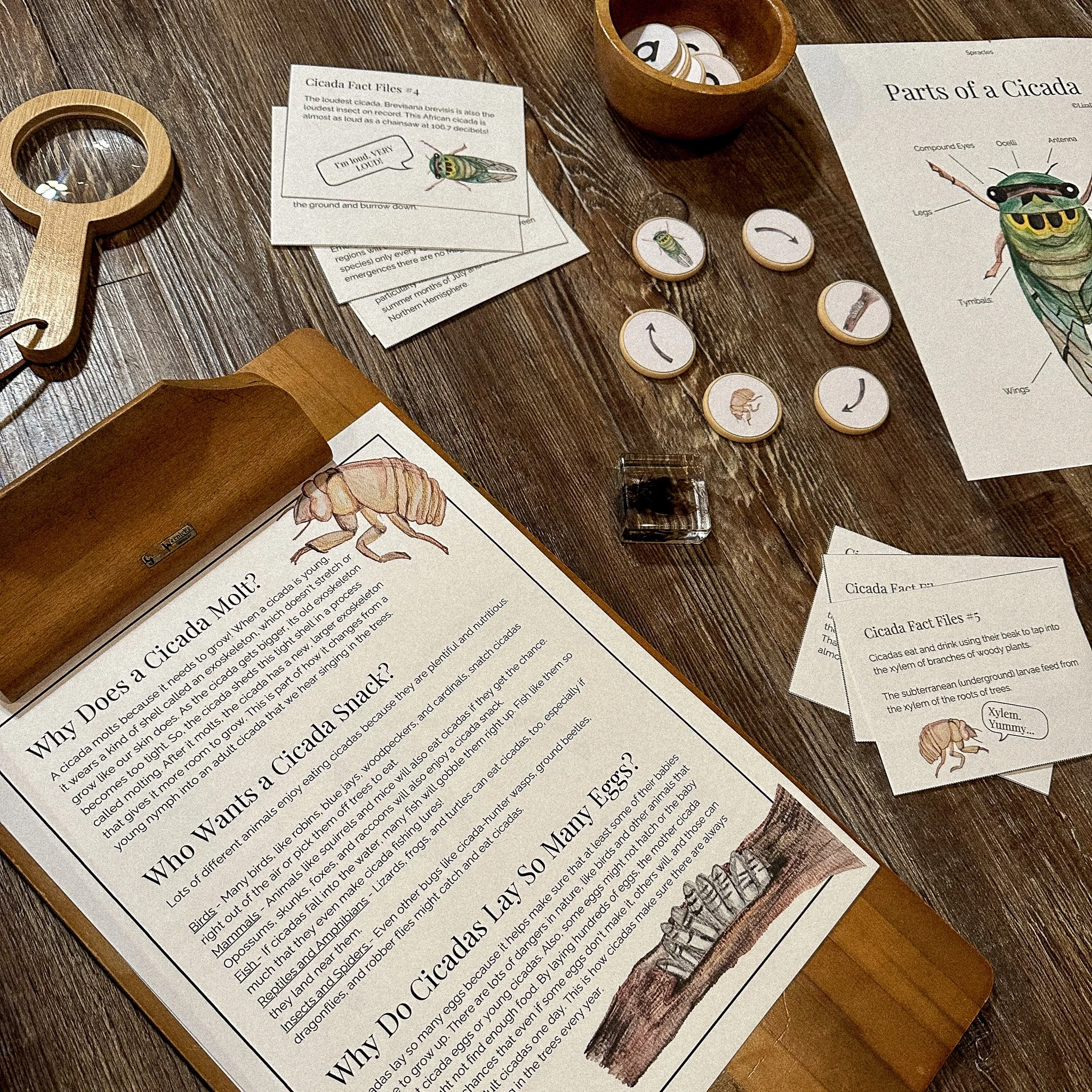
Most printable unit studies you'll find online use clip art—the same recycled digital illustrations on hundreds of products. There's nothing wrong with functional, but there's something different about sitting down with an activity page illustrated in original hand-painted watercolor.
Watercolor artwork captures the real textures and colors of nature in a way that clip art simply doesn't. A watercolor cicada has translucent wings with visible veins. It has the warm amber of a real shell. Kids notice these details, and those details become the bridge between a printable on the kitchen table and the actual cicada shell on the back porch.
For parents and educators who value beauty in learning materials—who believe that what surrounds a child matters — original artwork isn't a luxury. It's the whole point.
🦟 Cicada Unit Study | Original Watercolor Art | 16 Printable Activities for Ages 2–10
Hear that buzzing in the trees? That's cicada season calling — and this Cicada Unit Study turns the backyard soundtrack of summer into a complete, multi-subject learning adventure your kids will love.
With 16 beautifully illustrated printable activities spanning science, reading, math, literacy, art, and music, this unit study takes a single fascinating insect and explores it from every angle — life cycle, anatomy, sound science, predators, and even how to build your own cicada-inspired musical instrument.
What sets this unit study apart?
Every page features
original hand-painted watercolor artwork
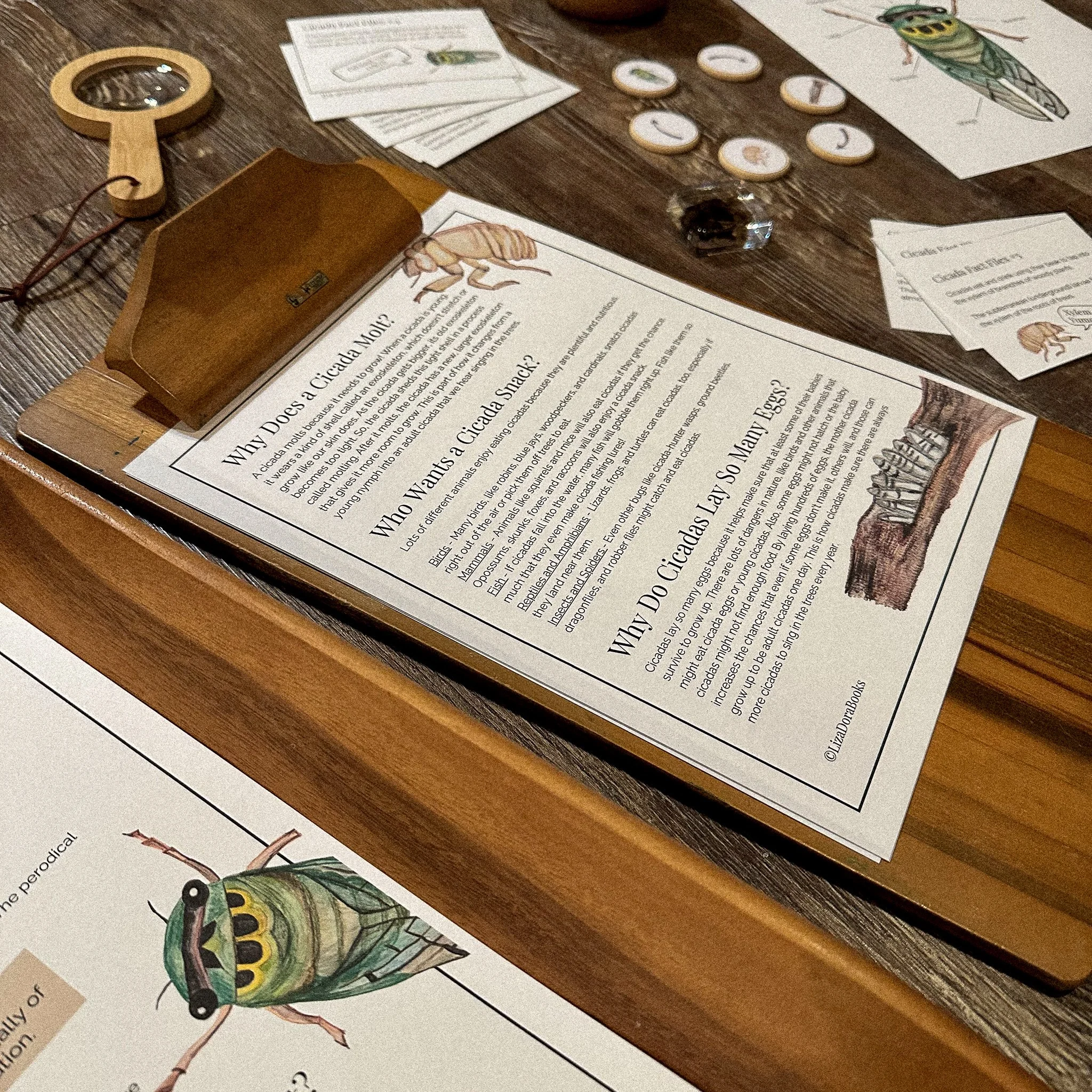
of a Texas-native cicada species — the same stunning art quality you'll find in our Moon and Fall bundles. You'll see the adult cicada in brilliant greens and golds, the translucent nymph shell in delicate tans, and even the eggs on their woody branch. This is not clip art. This is real art that makes learning feel like an experience, not a worksheet.
But the real magic is in the depth. Your little entomologist won't just learn
what
a cicada looks like — they'll discover
why
cicadas molt (exoskeletons!),
who
eats them (everyone, apparently),
why
they lay hundreds of eggs, and
how
male cicadas produce their incredible sound using tymbal organs that vibrate up to 480 times per second. Then they'll take that science knowledge and
build their own Cicada Guitar
— a hands-on STEM craft using popsicle sticks and rubber bands that teaches resonance, vibration, and sound in a way kids never forget.
The
8 Cicada Fact File Cards
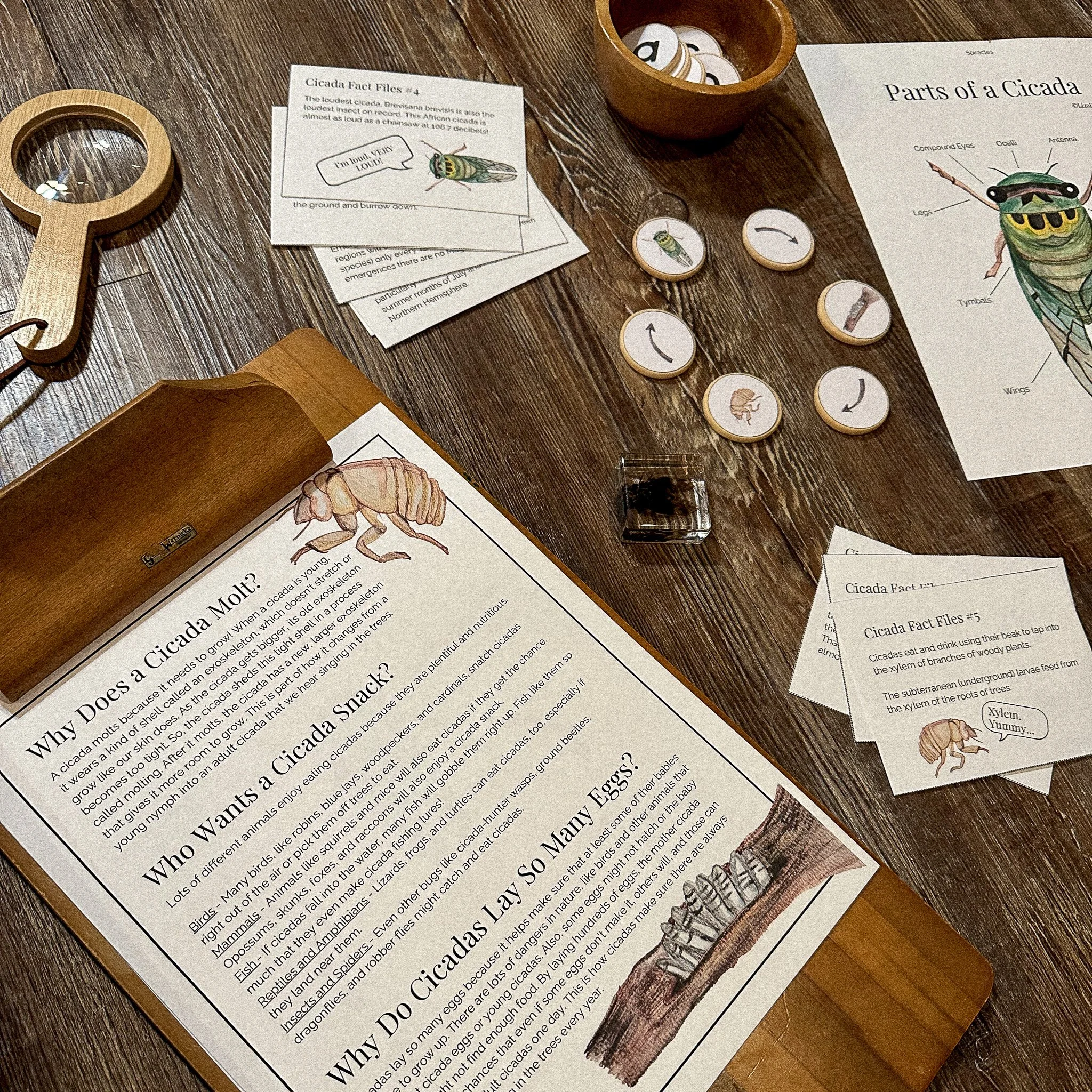
are packed with advanced science that keeps older kids engaged too — from the periodical Magicicada (which only emerges every 13 or 17 years!) to the Empress Cicada of Malaysia with an 8-inch wingspan, to the Cicada Hunter Wasps that paralyze their prey. And the
Advanced Cicada Vocabulary Extension
introduces real scientific terms like Arthropoda, Phylum, Periodicity, Xylem, and Resonance — perfect for stretching curious minds.
What makes this unit study special:
🎨
Original watercolor artwork throughout
— Hand-painted Texas-native cicada species on every page. No clip art anywhere.
🎸
Cicada Guitar Musical Craft
— A hands-on STEM project that connects cicada tymbal science to music, sound, and vibration
📊
8 Fact File Cards
— Real science including Magicicada periodicity, the loudest insect on record, and Cicada Hunter Wasps
🔬
Life cycle explored 3 ways
— Illustrated poster, fill-in cards, and multi-size cut-out coins
📖
Science-rich reading activities
— Why cicadas molt, predator food chains, egg-laying survival strategies, and the physics of sound
🧠
Advanced Vocabulary Extension
— 2 pages of scientific terms that stretch learning well beyond preschool (Arthropoda, Phylum, Chelicerates, Xylem, Exoskeleton, and more)
✏️
Print AND Cursive handwriting
— Both styles included, plus a Let's Spell activity
🎨
2 Coloring Pages
— Adult cicada and nymph, hand-drawn from the original watercolor art
📋
Curated resources page
— Book recommendations, videos, and hands-on product suggestions to extend the learning
The 16 Activities:
Cicada Lifecycle Poster (simple + detailed labeled versions)
Cicada Lifecycle Cards (fill-in activity)
Cicada Lifecycle Circle Cut-Outs (3 sizes + letter coins)
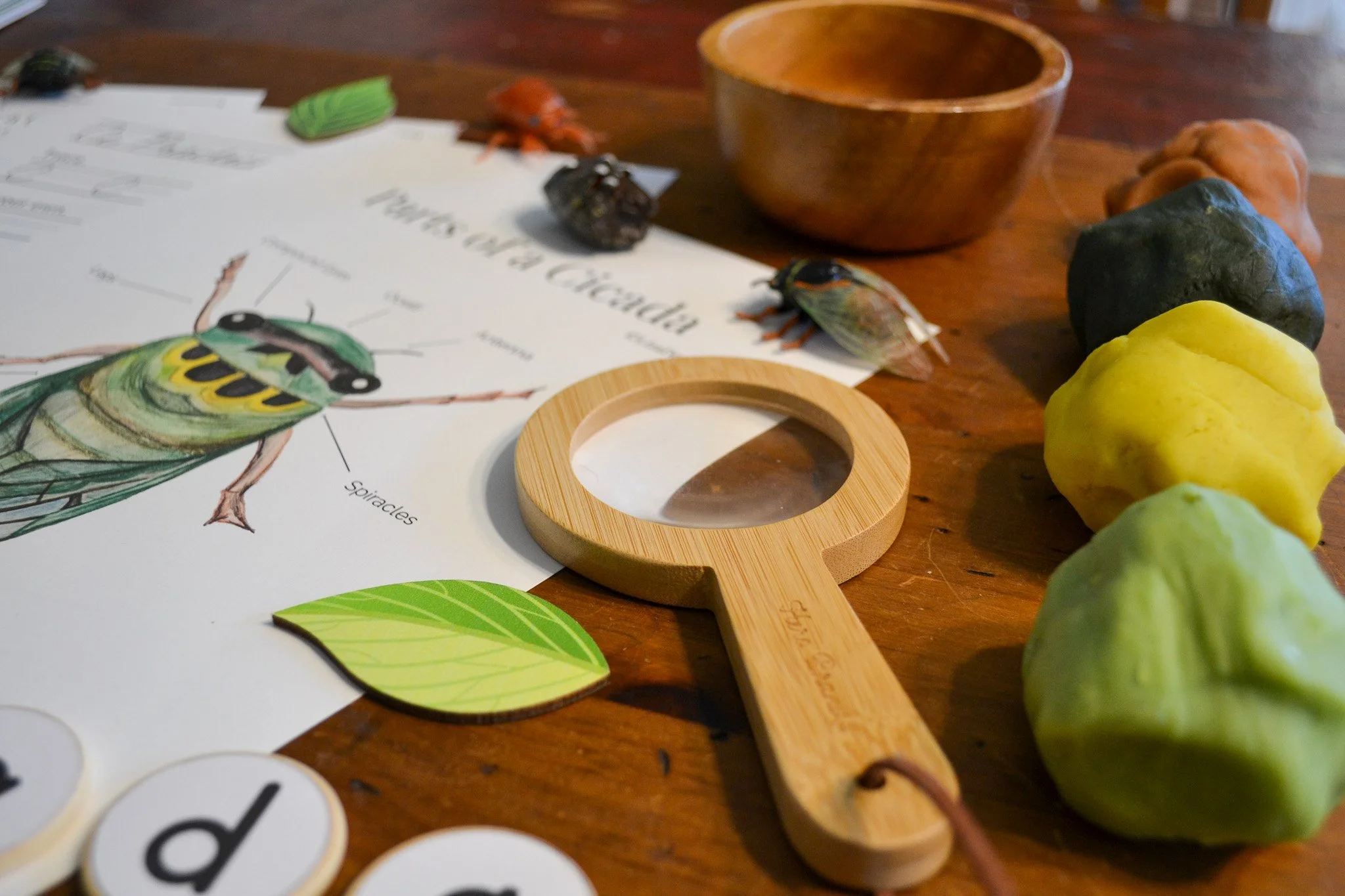
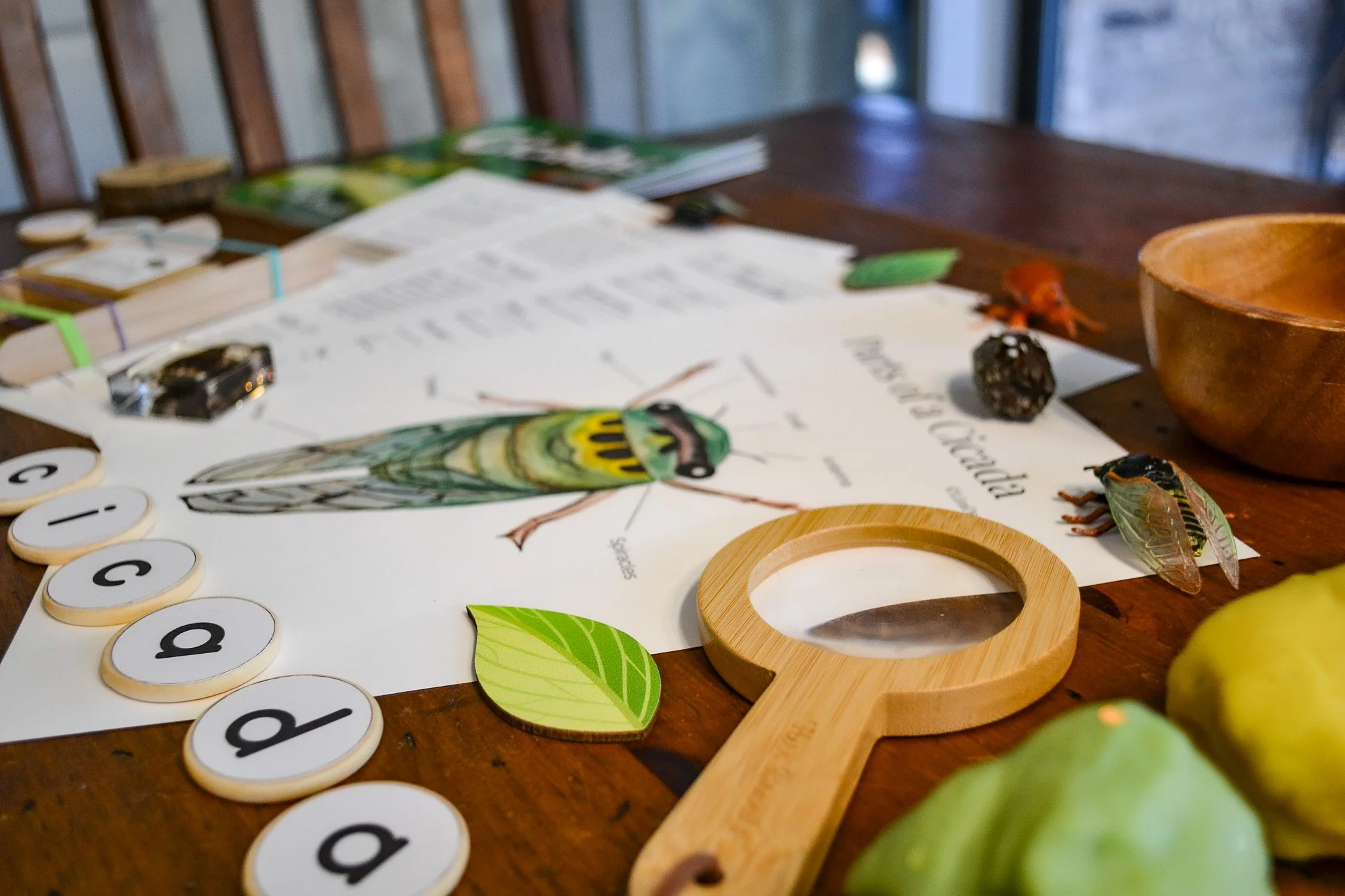
Parts of a Cicada Diagram (labeled watercolor)
(8) Cicada Fact File Cards
3 Reading Activities
Cc Handwriting Practice (Print)
Cc Handwriting Practice (Cursive)
Let's Spell Cicada
Advanced Cicada Vocabulary Extension
Cicada Counting Puzzle (1–10)
8.5x11" Cicada Art Print
Cicada Print
(2) Coloring Pages
Cicada Guitar Musical Craft
Cicada Unit Resources
Also Included:
Cover Page
— Beautiful watercolor cover for the complete unit
Regional Note
— The species depicted is native to Texas, but there are over 3,000 species worldwide! Your cicadas may look different — and that's part of the adventure.
"Hi Mom!" Letter
— A personal note from Liza about how her own family uses these activities
Who It's For:
This unit study works beautifully across a wide age range. Little ones (ages 2–4) will love the coloring pages, counting puzzle, art print, and cut-out coins. Preschoolers and kindergartners (ages 4–6) will dive into the life cycle activities, handwriting practice, spelling, and reading activities. And older kids (ages 6–10) will be fascinated by the fact file cards, advanced vocabulary, sound science, and the Cicada Guitar STEM craft. It's designed so big kids can read to little ones, everyone can color together, and there's truly no "right" way to use it.
Perfect for Montessori and Charlotte Mason homeschool families, nature study co-ops, preschool through elementary classrooms, summer learning programs, science centers, and morning tubs.
How It Works:
Purchase and download instantly
Print the activities you need (unlimited prints!)
Grab some crayons, scissors, popsicle sticks, and rubber bands — and start exploring!
No shipping wait. No subscription. Just download, print, and discover the incredible world of cicadas!
____________________________________________

Digital download. No product will be shipped.

Download is a high-quality PDF ready to print. Color print recommended. Some files arrive zipped — right-click (or use your Files app) to unzip/extract.

No refunds on digital downloads. If you have trouble with your order or download, contact support@lizadorabooks.com.

Featuring original artwork by Liza Dora. Materials may not be duplicated, distributed, or sold without express written permission from Liza Dora Books. Licensed for personal / household or single-classroom use (including one daycare group). For multi-classroom, school-wide, or district licensing, see /schools or email schools@lizadorabooks.com.When to Start a Cicada Unit Study
Cicadas are a natural fit for late spring and summer when annual cicadas emerge across much of the United States. But the science content is genuinely evergreen—life cycles, insect anatomy, sound and vibration, and nature observation skills are relevant any time of year.
If you're in Texas or the southern United States, you'll hear cicadas from roughly May through September, making it easy to pair indoor printable activities with outdoor observation. But even in January, a cicada unit study works beautifully as part of an insect or nature science rotation.
Getting Started
The best unit studies meet kids where they are. Start with what excites your child. If they love art, begin with the craft. If they love facts, start with the fact file cards. If they love sorting and matching, pull out the nomenclature cards first.
The Cicada Unit Study from Liza Dora Books includes 16 hands-on activities across 26 pages (covering life cycle science, anatomy, reading, math, art, music, and STEM) all illustrated in original hand-painted watercolor. It's designed for ages 4–10, with an advanced vocabulary extension so older learners aren't left out.
Every page prints beautifully on standard paper (or cardstock if you want activities to last through multiple kids), and you can print unlimited copies for your home or classroom.
Because the best science lessons don't start with a textbook. They start with kiddos who heard something buzzing and wanted to know more.
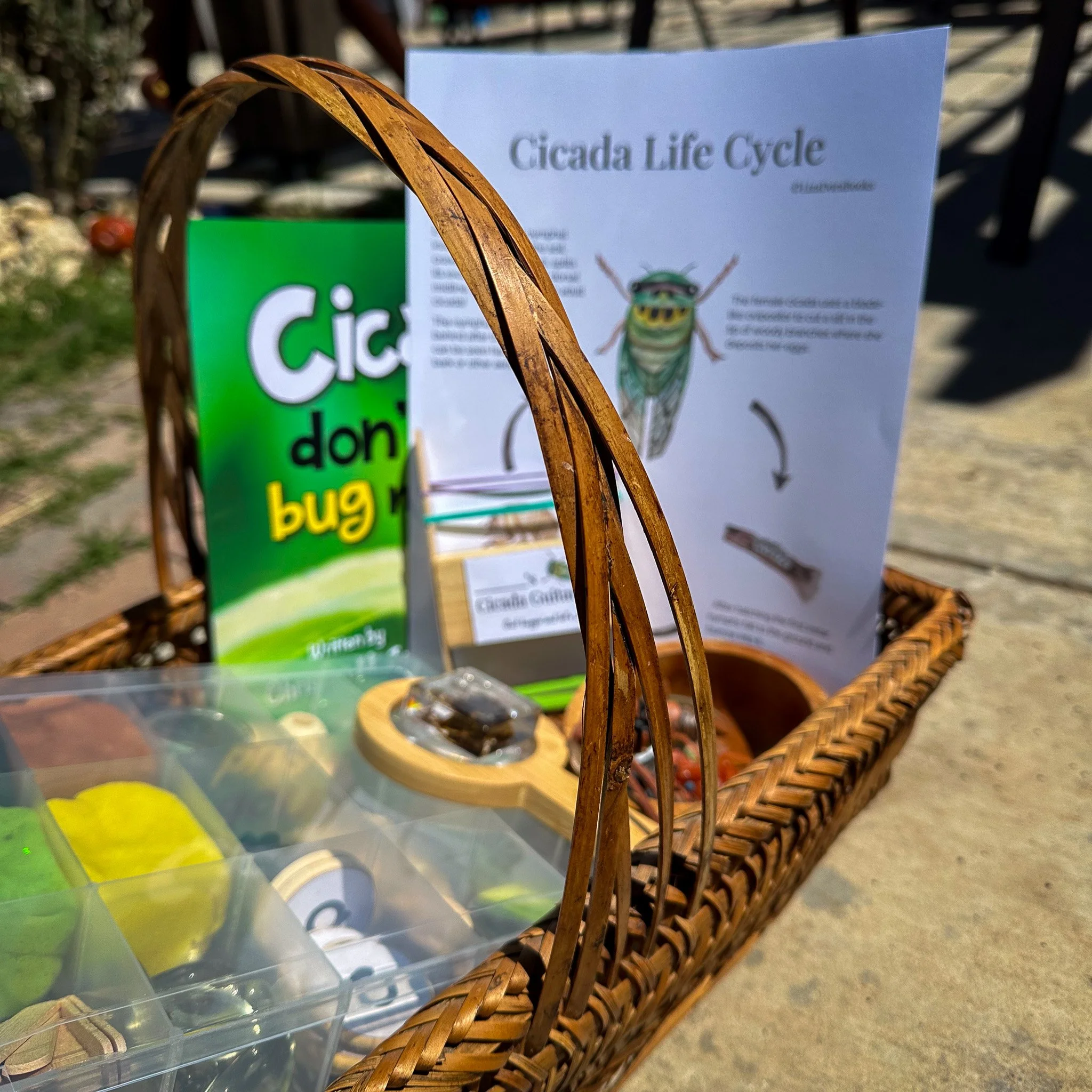
Here are a few cicada resources we used to complement our unit study.