Texas Wildflowers 3-Part Cards
$5.00
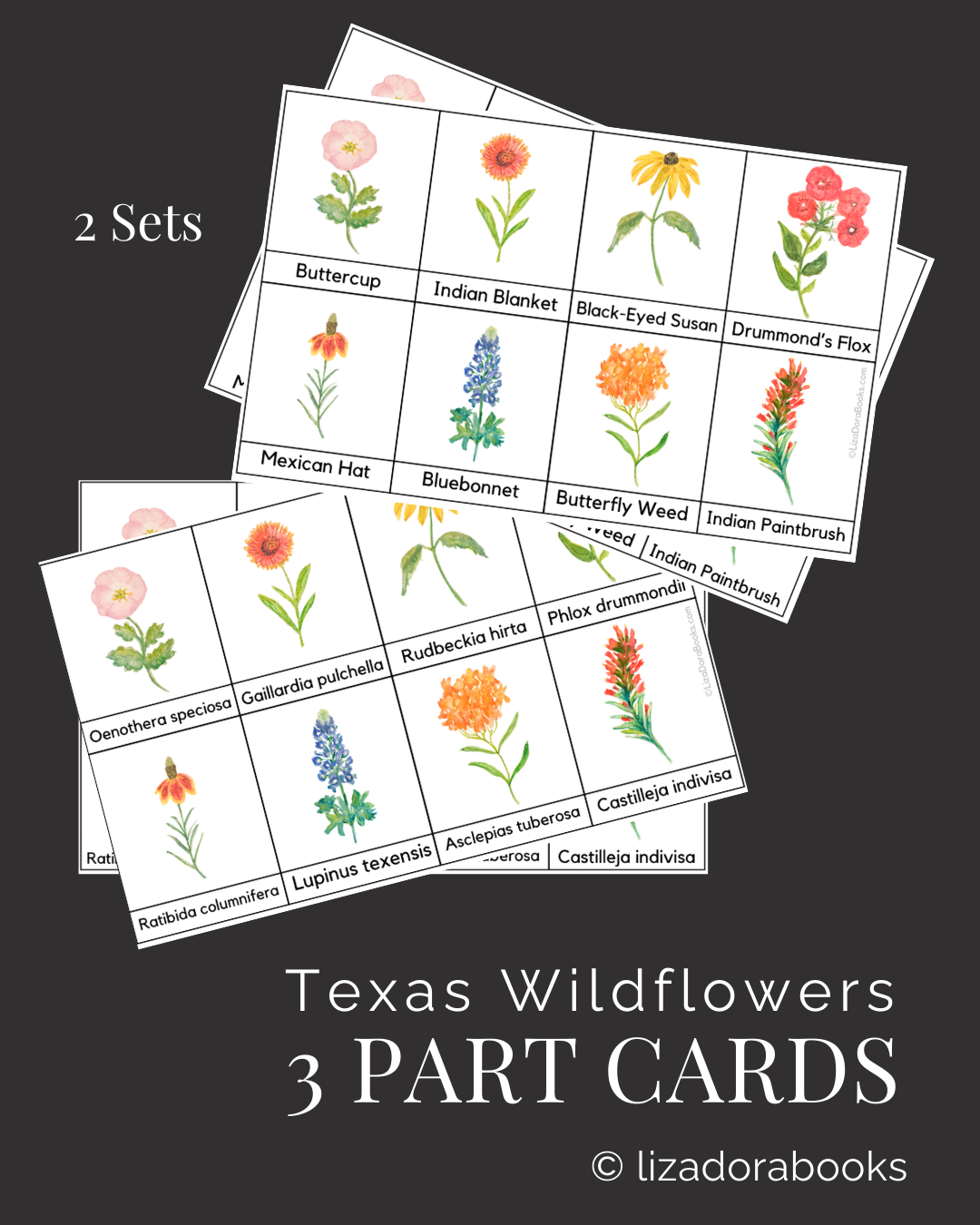
Bluebonnet season is just around the corner, and these Montessori 3-part cards bring eight of Texas's most beloved wildflowers right to your learning table.
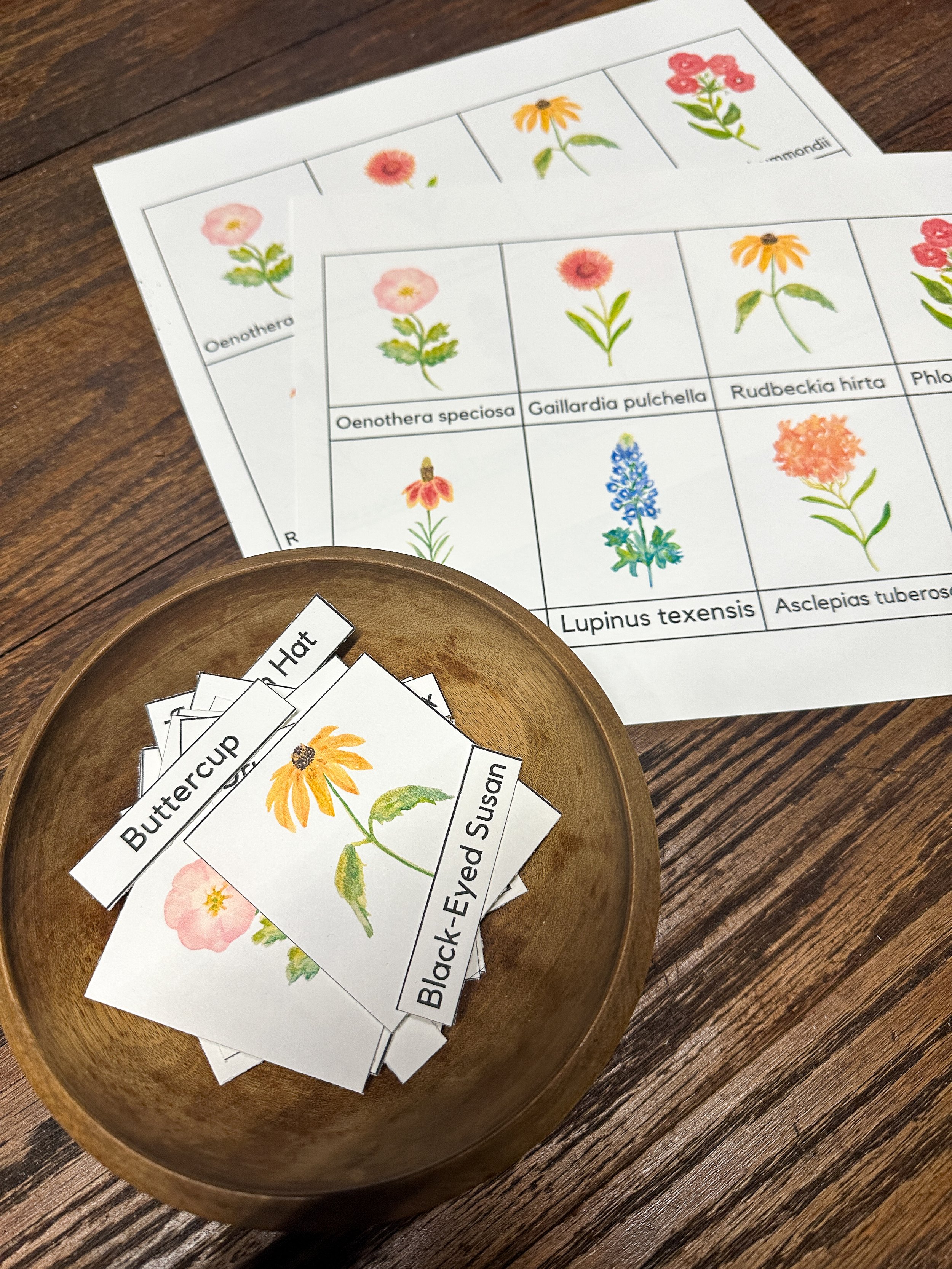
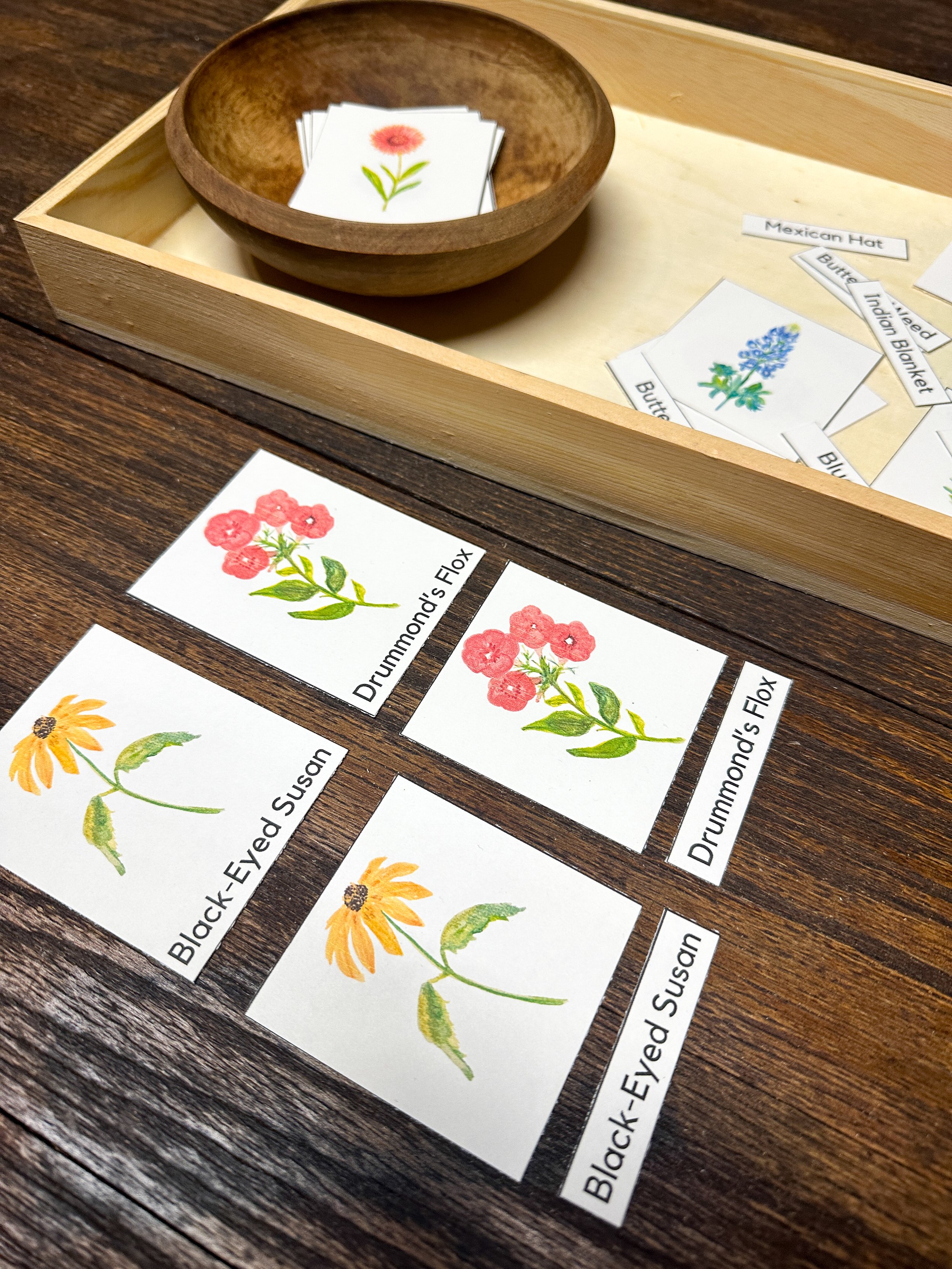
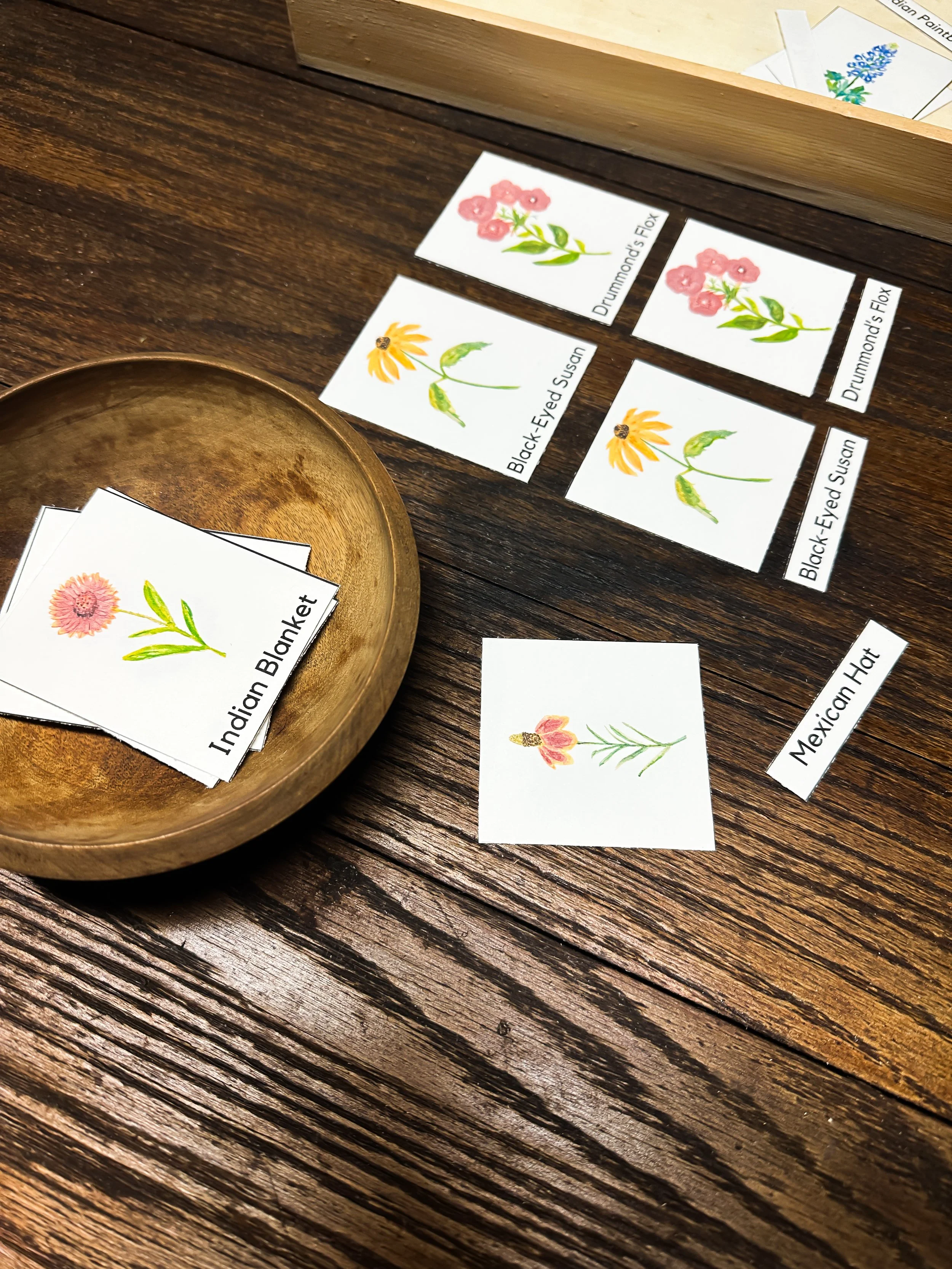
Each species was hand-painted in watercolor, capturing the real colors, textures, and details that make these flowers so recognizable along Texas roadsides every spring and summer. This is not clip art. These are original watercolor illustrations that turn a simple matching activity into something your child will actually want to pick up again and again.
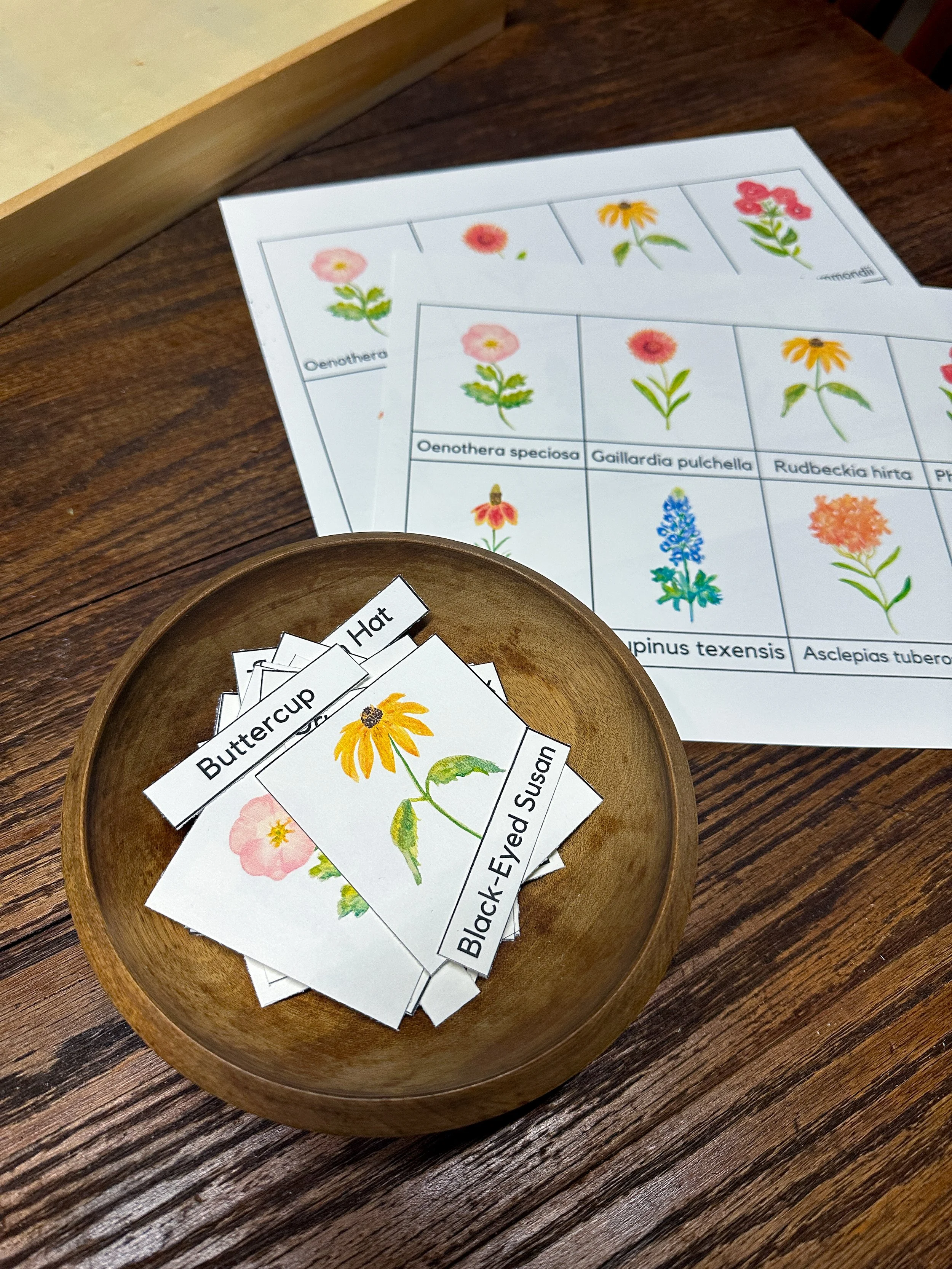
We included two complete card sets: one with common names and one with scientific names. The common names come first, because that's how Texans know their wildflowers. Your child will start by matching Bluebonnet, Indian Paintbrush, and Firewheel. When they're ready for a bigger challenge, the scientific name set introduces
Lupinus texensis
,
Castilleja indivisa
, and
Gaillardia pulchella
, stretching the same cards all the way up through elementary school.
That's what makes this set so versatile. A 3-year-old can match pictures and name the flowers. A 6-year-old can sort by bloom season and compare petal shapes. A 10-year-old can use the scientific names to explore Latin roots, plant families, and real botanical classification. One set of cards, years of learning.
What makes these cards special:
🎨 Original watercolor artwork on every card, hand-painted with the real colors and details of each species. No clip art anywhere.
🌿 Two complete 3-part card sets in one download: common names for younger learners, scientific names for older kids ready to level up.
🤠 Texas-native species that your child can actually find on nature walks, road trips, and in your own backyard. These aren't abstract flowers from a textbook.
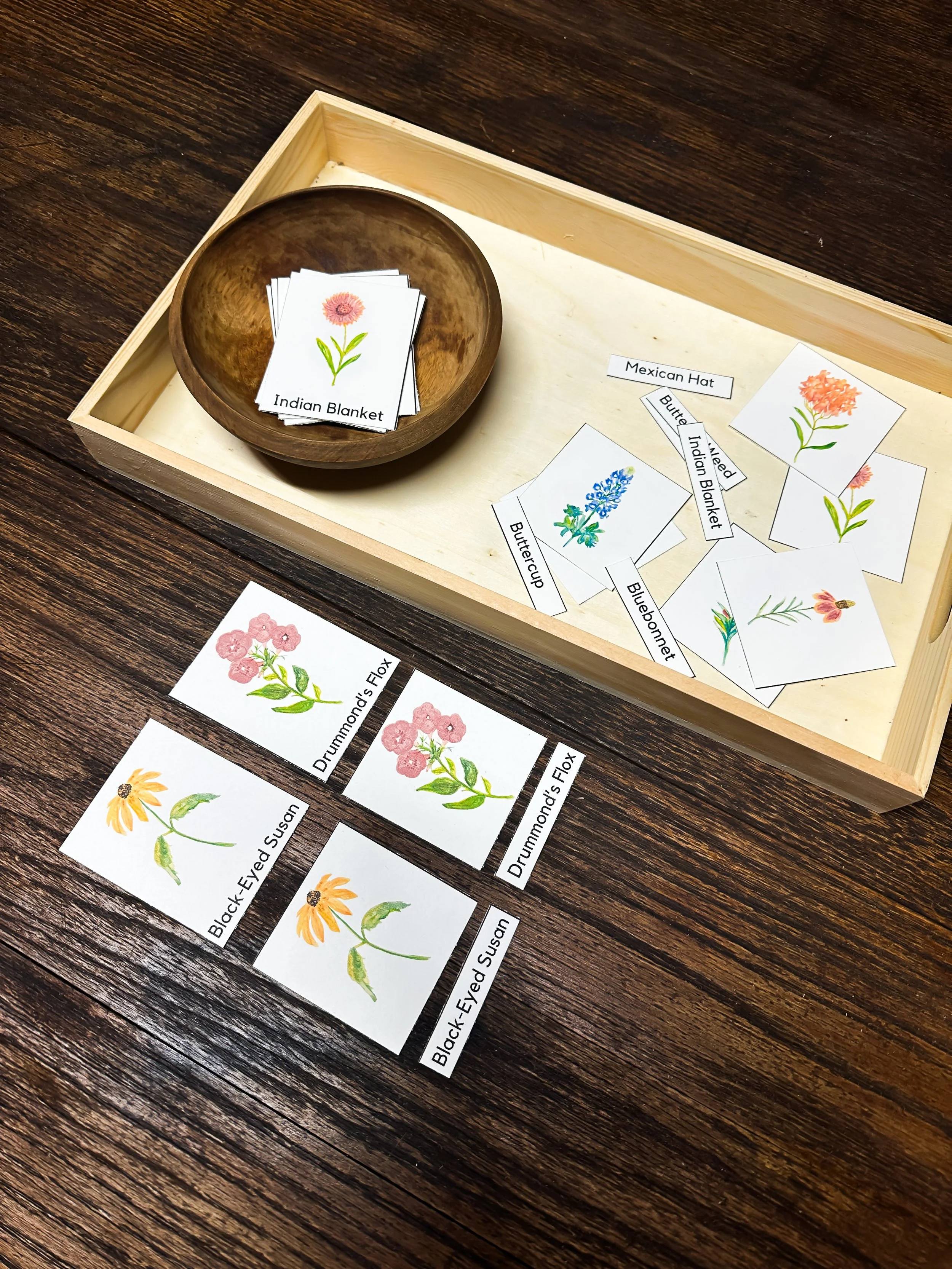
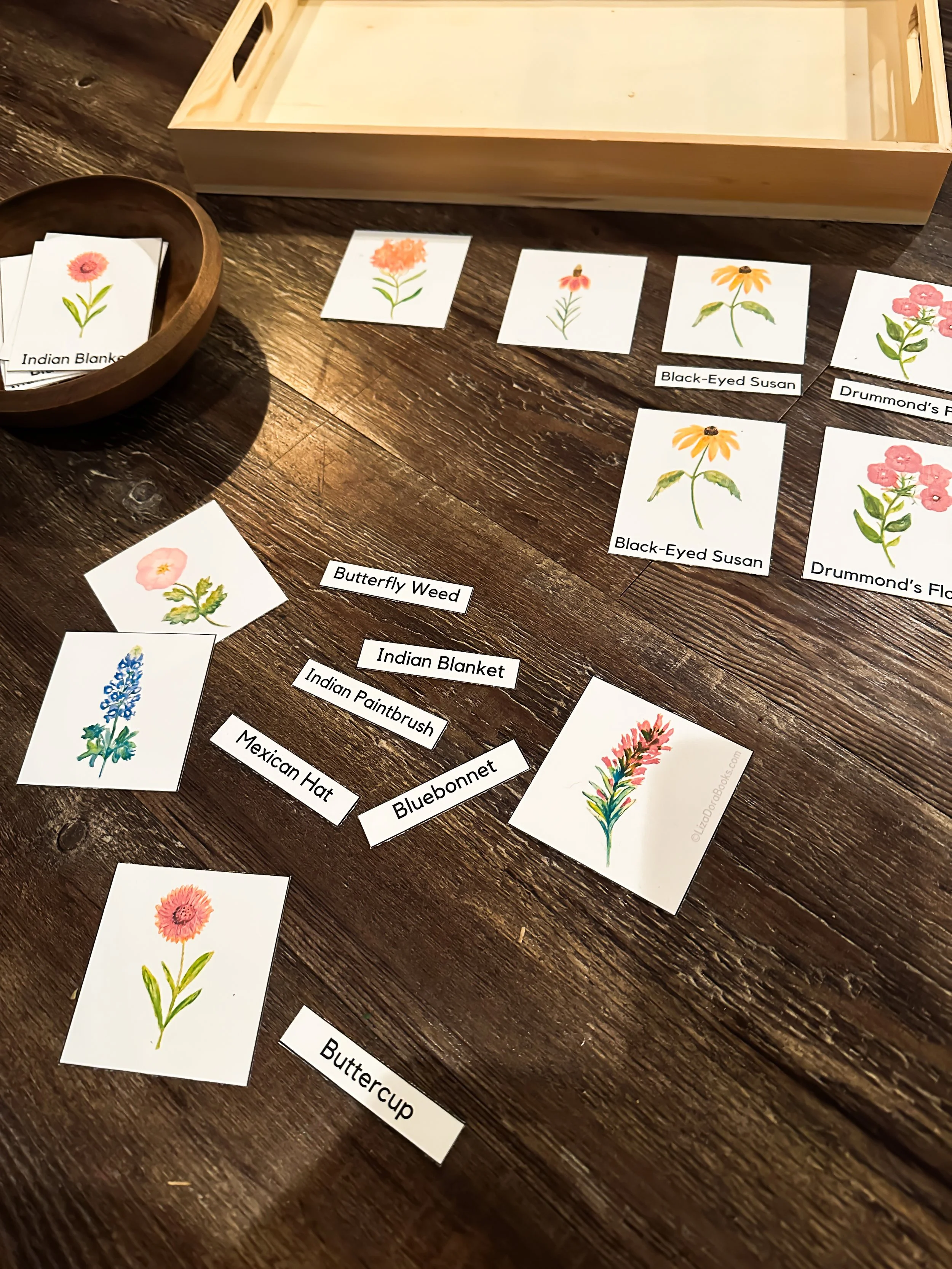
📚 True Montessori 3-part format: picture card, label card, and control card for each species. Built for the classic matching progression that builds vocabulary, reading, and memory.
🔬 Scientific names included for all 8 species, perfect for introducing binomial nomenclature, Latin roots, and real-world botany to older learners.
🌼 Wide age range (3–12) because the two-set structure means this printable grows with your child instead of getting outgrown in a year.
The 8 Species:
Texas Bluebonnet (
Lupinus texensis
)
Indian Paintbrush (
Castilleja indivisa
)
Indian Blanket / Firewheel (
Gaillardia pulchella
)
Pink Evening Primrose (
Oenothera speciosa
)
Mexican Hat (
Ratibida columnifera
)
Black-Eyed Susan (
Rudbeckia hirta
)
Drummond's Phlox (
Phlox drummondii
)
Butterfly Weed (
Asclepias tuberosa
)
What's Included:
Common Name 3-Part Card Set (picture cards, label cards, and control cards for all 8 species)
Scientific Name 3-Part Card Set (picture cards, label cards, and control cards for all 8 species)
Instructions + Ideas Page with activity suggestions, tips for different age groups, and creative ways to extend the learning
Who It's For:
These cards work beautifully across a wide age range. Little ones (ages 3–5) will love matching the picture cards to the common name labels, sorting by color, and naming the flowers they've seen on walks. Early elementary learners (ages 6–8) can tackle the scientific name set, sort by bloom season, and start a nature journal. And older kids (ages 9–12) can use the scientific names as a gateway to Latin roots, plant classification, and independent research. Pair these with a Texas wildflower field guide, a magnifying glass, and a nature walk for the full experience.
Perfect for
Montessori and Charlotte Mason homeschool families, nature study co-ops, preschool through elementary classrooms, Texas history and science units, and anyone who wants their kids to know the real names of the flowers blooming outside their window.
How It Works:
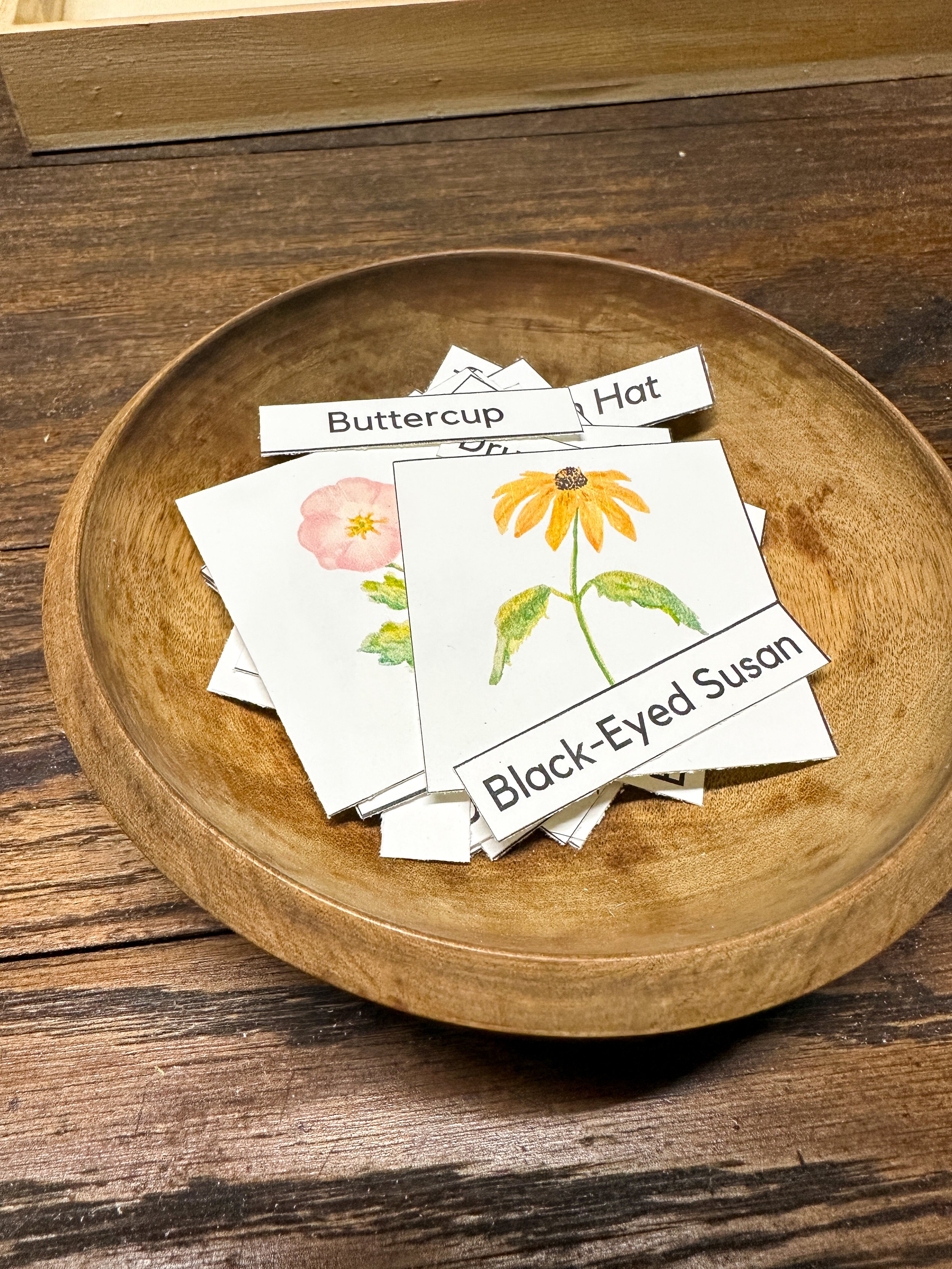
Purchase and download instantly Print the cards on cardstock and cut (laminate for extra durability!) Start matching, sorting, and exploring, indoors or out in the field
No shipping wait. No subscription. Just download, print, and discover the wildflowers of Texas.
—————

Digital download. No product will be shipped.

Download is a high-quality PDF ready to print. Color print recommended. Some files arrive zipped — right-click (or use your Files app) to unzip/extract.

No refunds on digital downloads. If you have trouble with your order or download, contact support@lizadorabooks.com.

Featuring original artwork by Liza Dora. Materials may not be duplicated, distributed, or sold without express written permission from Liza Dora Books. Licensed for personal / household or single-classroom use (including one daycare group). For multi-classroom, school-wide, or district licensing, see /schools or email schools@lizadorabooks.com.Bluebonnet season is just around the corner, and these Montessori 3-part cards bring eight of Texas's most beloved wildflowers right to your learning table.
Each species was hand-painted in watercolor, capturing the real colors, textures, and details that make these flowers so recognizable along Texas roadsides every spring and summer. This is not clip art. These are original watercolor illustrations that turn a simple matching activity into something your child will actually want to pick up again and again.
We included two complete card sets: one with common names and one with scientific names. The common names come first, because that's how Texans know their wildflowers. Your child will start by matching Bluebonnet, Indian Paintbrush, and Firewheel. When they're ready for a bigger challenge, the scientific name set introduces
Lupinus texensis
,
Castilleja indivisa
, and
Gaillardia pulchella
, stretching the same cards all the way up through elementary school.
That's what makes this set so versatile. A 3-year-old can match pictures and name the flowers. A 6-year-old can sort by bloom season and compare petal shapes. A 10-year-old can use the scientific names to explore Latin roots, plant families, and real botanical classification. One set of cards, years of learning.
What makes these cards special:
🎨 Original watercolor artwork on every card, hand-painted with the real colors and details of each species. No clip art anywhere.
🌿 Two complete 3-part card sets in one download: common names for younger learners, scientific names for older kids ready to level up.
🤠 Texas-native species that your child can actually find on nature walks, road trips, and in your own backyard. These aren't abstract flowers from a textbook.
📚 True Montessori 3-part format: picture card, label card, and control card for each species. Built for the classic matching progression that builds vocabulary, reading, and memory.
🔬 Scientific names included for all 8 species, perfect for introducing binomial nomenclature, Latin roots, and real-world botany to older learners.
🌼 Wide age range (3–12) because the two-set structure means this printable grows with your child instead of getting outgrown in a year.
The 8 Species:
Texas Bluebonnet (
Lupinus texensis
)
Indian Paintbrush (
Castilleja indivisa
)
Indian Blanket / Firewheel (
Gaillardia pulchella
)
Pink Evening Primrose (
Oenothera speciosa
)
Mexican Hat (
Ratibida columnifera
)
Black-Eyed Susan (
Rudbeckia hirta
)
Drummond's Phlox (
Phlox drummondii
)
Butterfly Weed (
Asclepias tuberosa
)
What's Included:
Common Name 3-Part Card Set (picture cards, label cards, and control cards for all 8 species)
Scientific Name 3-Part Card Set (picture cards, label cards, and control cards for all 8 species)
Instructions + Ideas Page with activity suggestions, tips for different age groups, and creative ways to extend the learning
Who It's For:
These cards work beautifully across a wide age range. Little ones (ages 3–5) will love matching the picture cards to the common name labels, sorting by color, and naming the flowers they've seen on walks. Early elementary learners (ages 6–8) can tackle the scientific name set, sort by bloom season, and start a nature journal. And older kids (ages 9–12) can use the scientific names as a gateway to Latin roots, plant classification, and independent research. Pair these with a Texas wildflower field guide, a magnifying glass, and a nature walk for the full experience.
Perfect for
Montessori and Charlotte Mason homeschool families, nature study co-ops, preschool through elementary classrooms, Texas history and science units, and anyone who wants their kids to know the real names of the flowers blooming outside their window.
How It Works:
Purchase and download instantly Print the cards on cardstock and cut (laminate for extra durability!) Start matching, sorting, and exploring, indoors or out in the field
No shipping wait. No subscription. Just download, print, and discover the wildflowers of Texas.
—————
Digital download. No product will be shipped.
Download is a high-quality PDF ready to print. Color print recommended. Some files arrive zipped — right-click (or use your Files app) to unzip/extract.
No refunds on digital downloads. If you have trouble with your order or download, contact support@lizadorabooks.com.
Featuring original artwork by Liza Dora. Materials may not be duplicated, distributed, or sold without express written permission from Liza Dora Books. Licensed for personal / household or single-classroom use (including one daycare group). For multi-classroom, school-wide, or district licensing, see /schools or email schools@lizadorabooks.com.