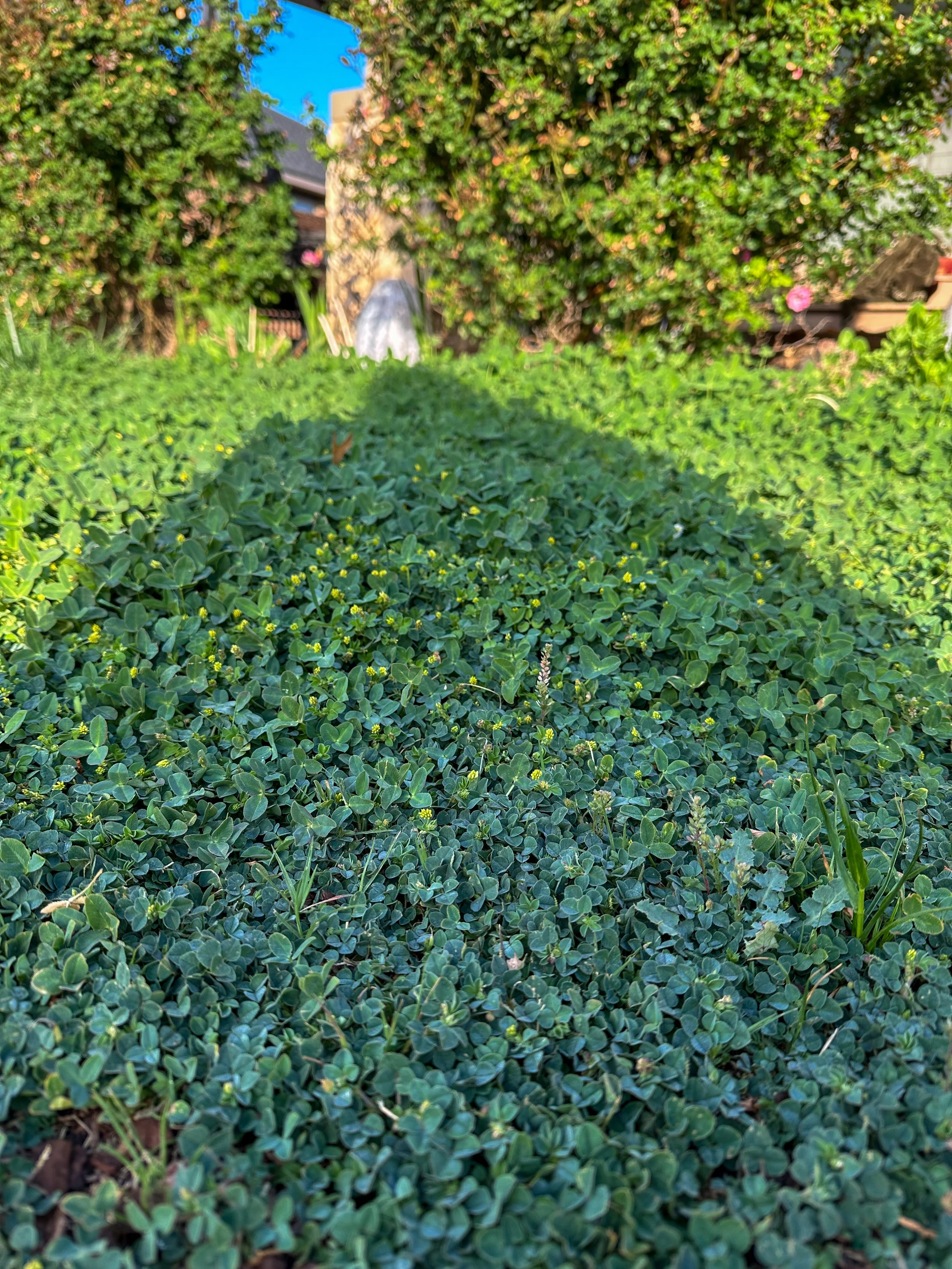
Our Clover Lawn: A Simple Way to Help Pollinators (And Make Your Yard Easier to Care For)
Red rover, red rover—let clover come over! I could’ve also called this blog “Why my neighbors kind of hate me”.
A few years ago, we decided to try something different with our yard and planted a clover lawn. Why? Because our soil was terrible, I read you didn’t have to mow as much, and finally—I hadn’t seen a bee in a year.
We live in West Texas and while it’s considered the high plains we definitely have desert vibes. We’re two and half years in and things are going awesome. We’ve got bees and birds, the clover stays low, and it’s really soft to walk on barefoot, which is something I’ve been encoring with my kids. It’s grounding, and we can’t forest bathe, so I’m going to just call this “clover standing”. Here’s how we got started and why…
Why Clover Is a Pollinator Favorite
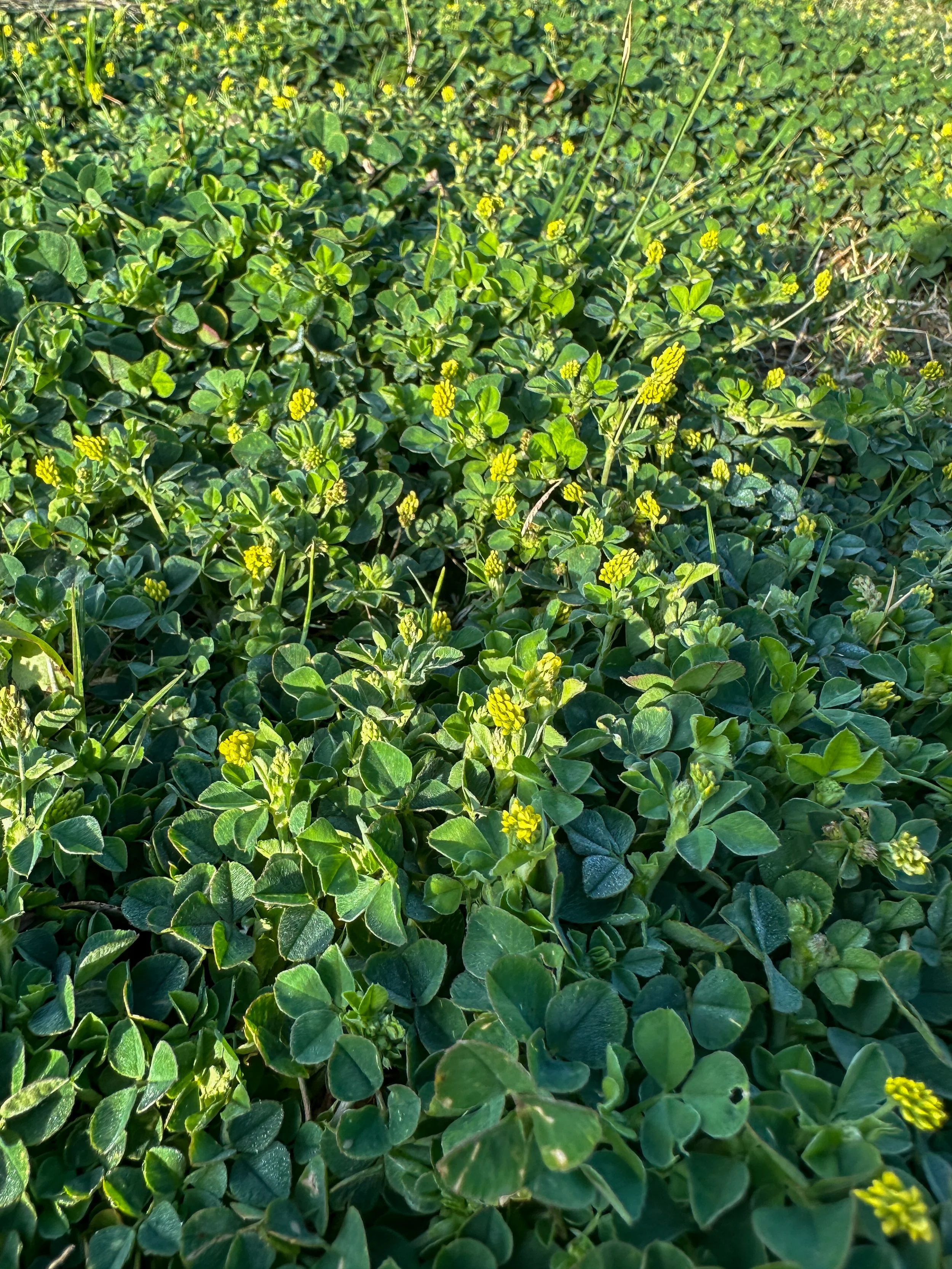
Clover produces small, nectar-rich flowers that are incredibly accessible to a wide variety of pollinators. Honey bees, bumble bees, and many native bee species love visiting white clover blooms for both nectar and high-protein pollen. Butterflies and other beneficial insects are frequent guests too.
Unlike many traditional grass lawns that offer little to no food, a clover lawn turns your yard into a natural buffet. The flowers bloom over a long period, providing a steady food source during times when other plants might not be flowering. Even a modest clover patch can make a meaningful difference for local pollinators, especially in suburban or urban neighborhoods where natural habitat is limited.
More Than Just Pretty Flowers
Beyond the pollinator benefits, clover offers several practical advantages that make it a smart choice:
Natural fertilizer: Clover is a legume that fixes nitrogen from the air into the soil, essentially feeding itself and any surrounding grass. This means less (or no) need for synthetic fertilizers.
Drought tolerance: Once established, clover handles dry spells better than many turf grasses, reducing the need for frequent watering.
Less mowing: Clover grows low and slow, so you can mow less often while still keeping a tidy look. Many people let it flower for the bees and only mow paths or every few weeks.
Weed suppression: Its dense growth helps crowd out unwanted weeds naturally.
The result? A softer, more resilient lawn that looks charming with its delicate white (or sometimes pinkish) blooms and requires far less time, money, and chemicals to maintain.
Tips for a Successful Clover Lawn
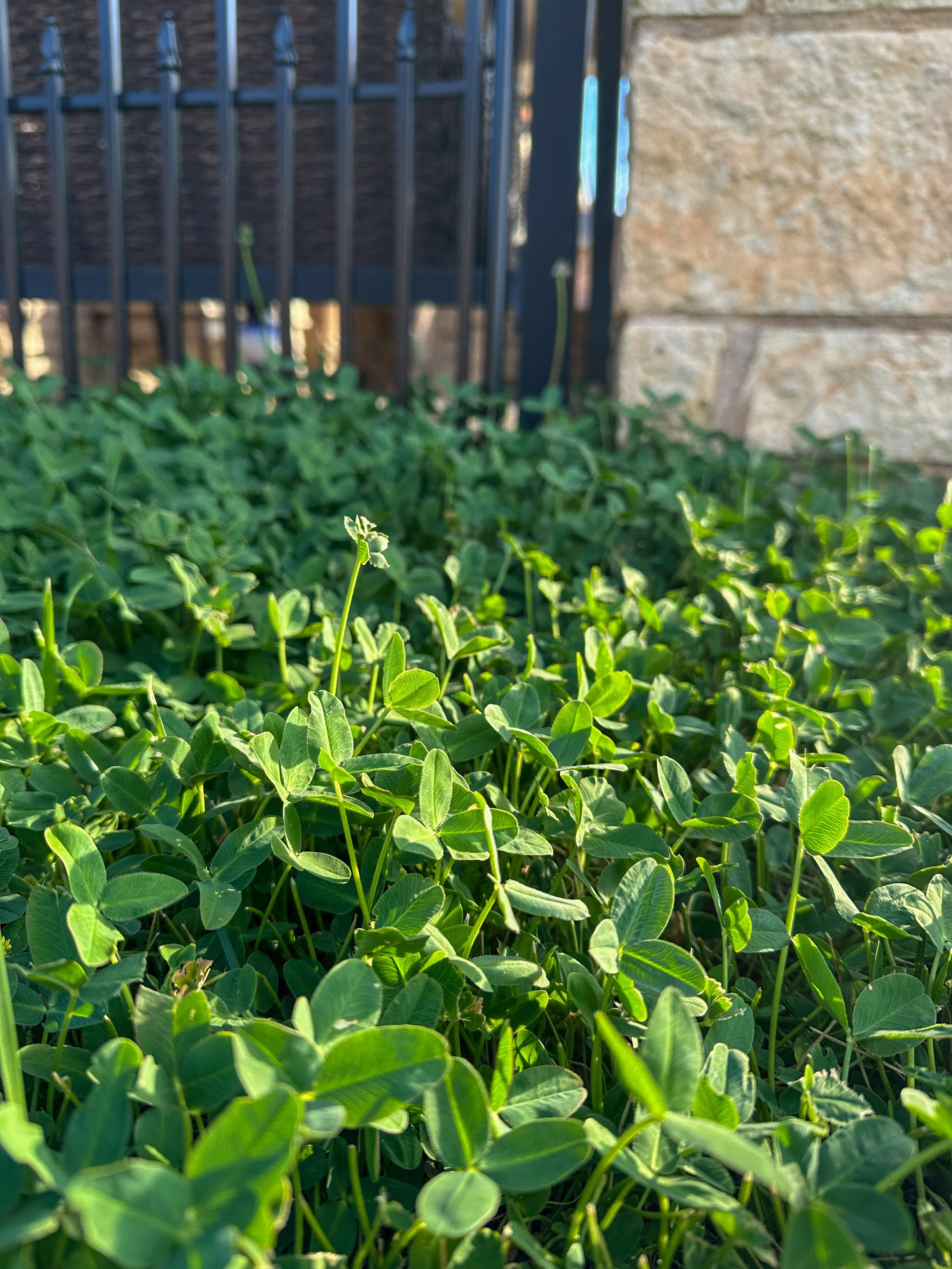
Choose Dutch white clover or a microclover variety for lawns—they stay low-growing and mix well with grass if you want a blended look.
You can (and should) eliminate chemical herbicides and fertilizers to let the clover thrive (and protect the pollinators you're trying to help).
Mow higher and less frequently when the flowers are blooming to maximize benefits for bees.
Water regularly while getting established, then ease off once the roots are deep.
A clover lawn isn't a complete wildlife habitat on its own, but it's a wonderful, low-effort step toward supporting pollinators and building a more sustainable yard.
Last year we had a local sales person come up and say in alarm “Ma’am, your yard has almost been taken over by clover!” My son was 6 at the time and piped up—”We planted it!” He looked at us like we we’re totally insane.
LOL.
This year, I made a yard sign so people would know we’re choosing to have a clover yard. So if you do choose to go this route—you’re not alone, but get ready for some funny looks, a skeptical husband, and some happy kids!
Welcome to the Clover Takeover.