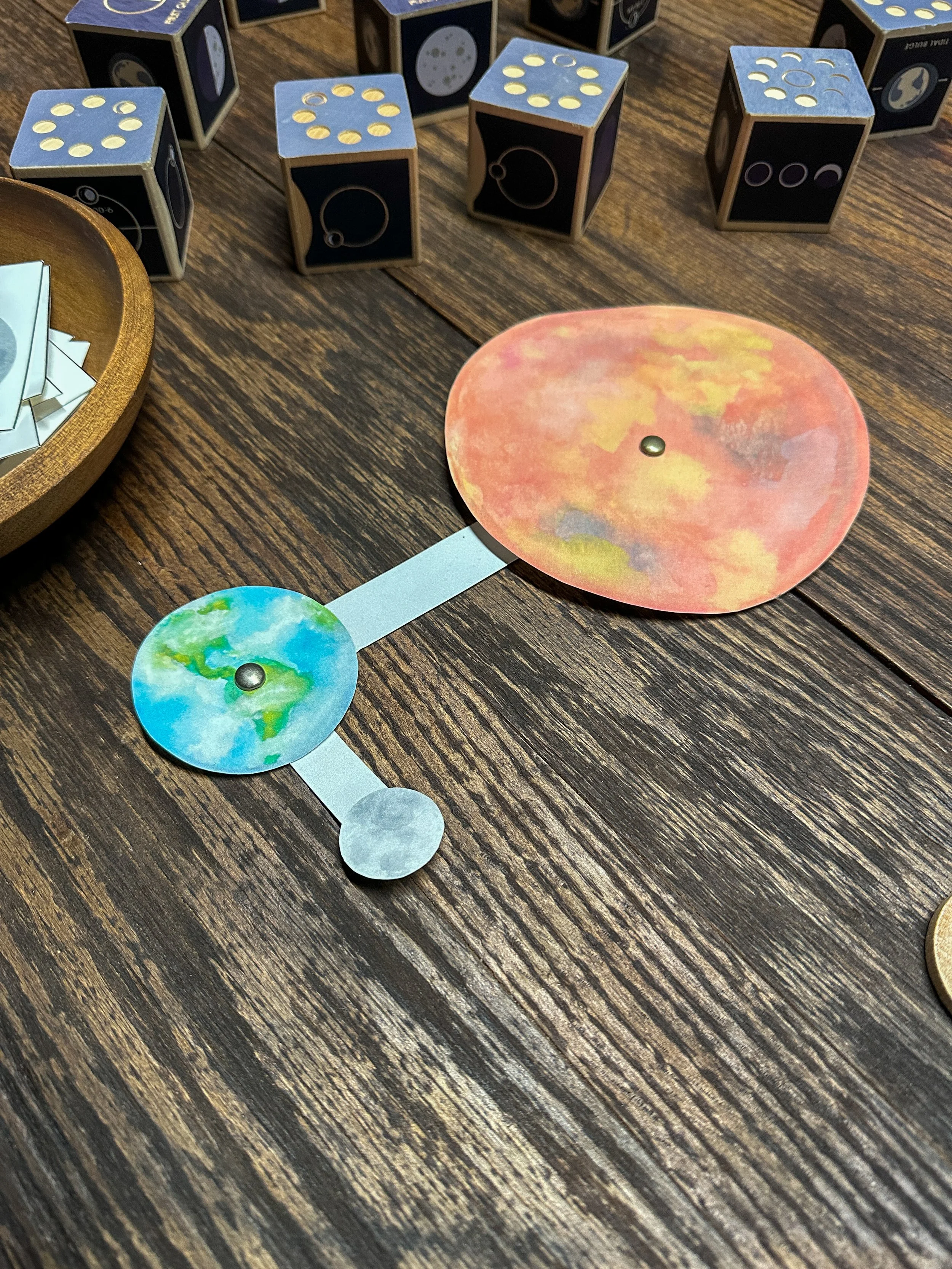
Orbits of the Earth and Moon Project
Moon phases can be tough to visualize and isn’t just kids who struggle with it. I can't tell you how many adults I've talked to who get a little fuzzy when you ask them why the Moon looks different every night. The short answer? It all comes down to orbits.
Understanding how the Earth moves around the Sun and how the Moon moves around the Earth is the foundation for everything else in space science:moon phases, eclipses, seasons, tides. Once a child can picture these orbits in their head, all of those "big" concepts can snap into place.
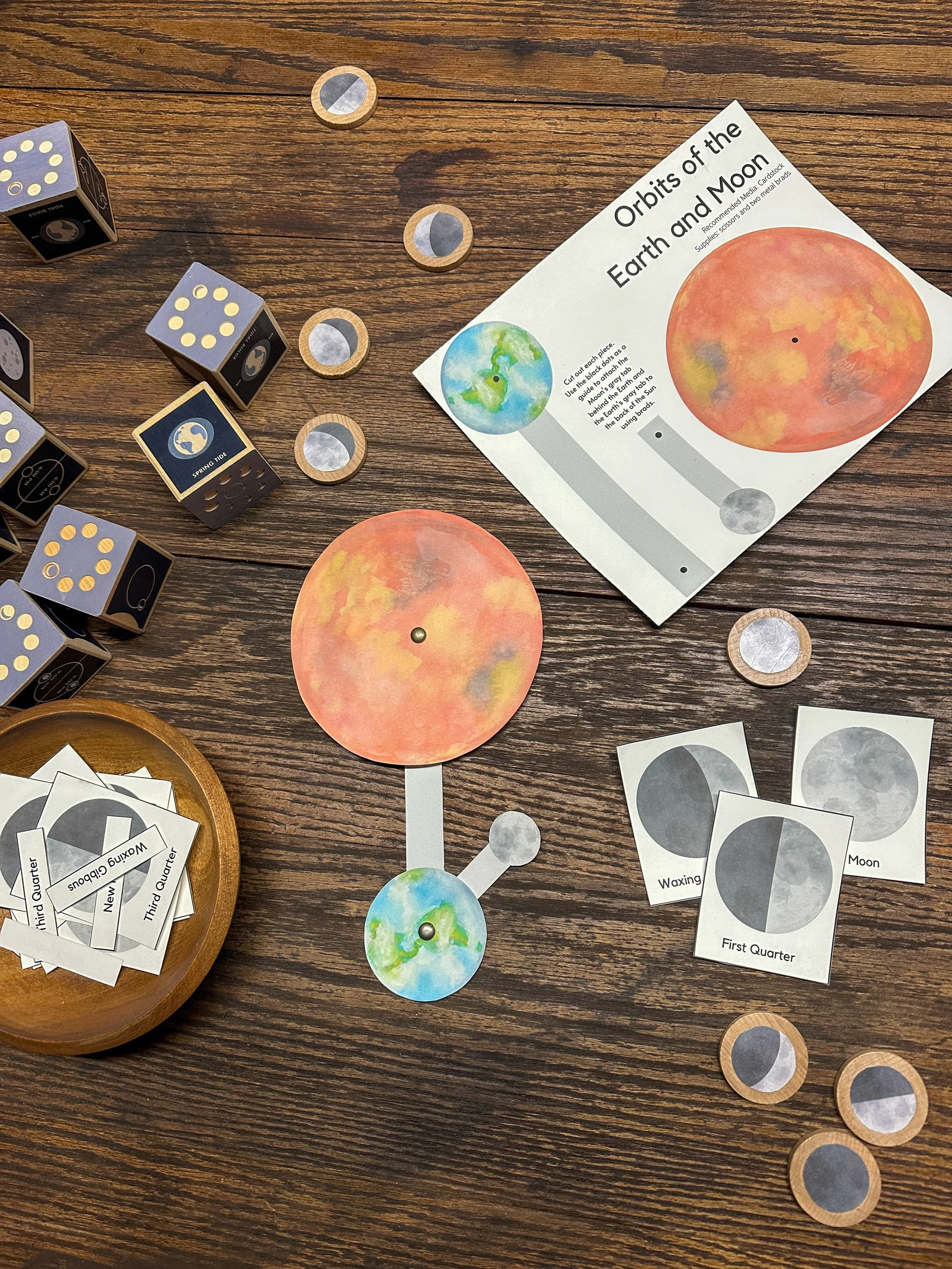
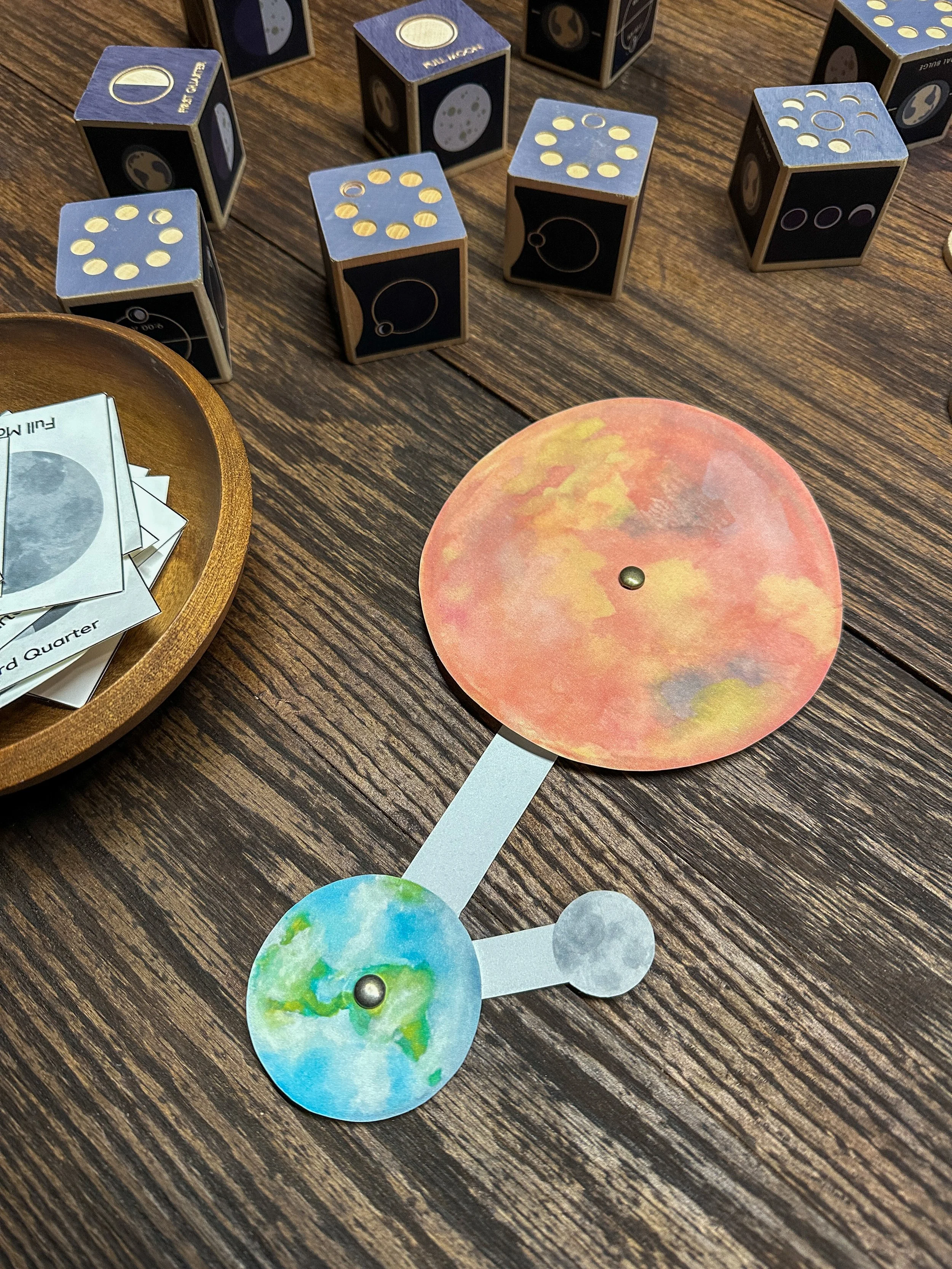
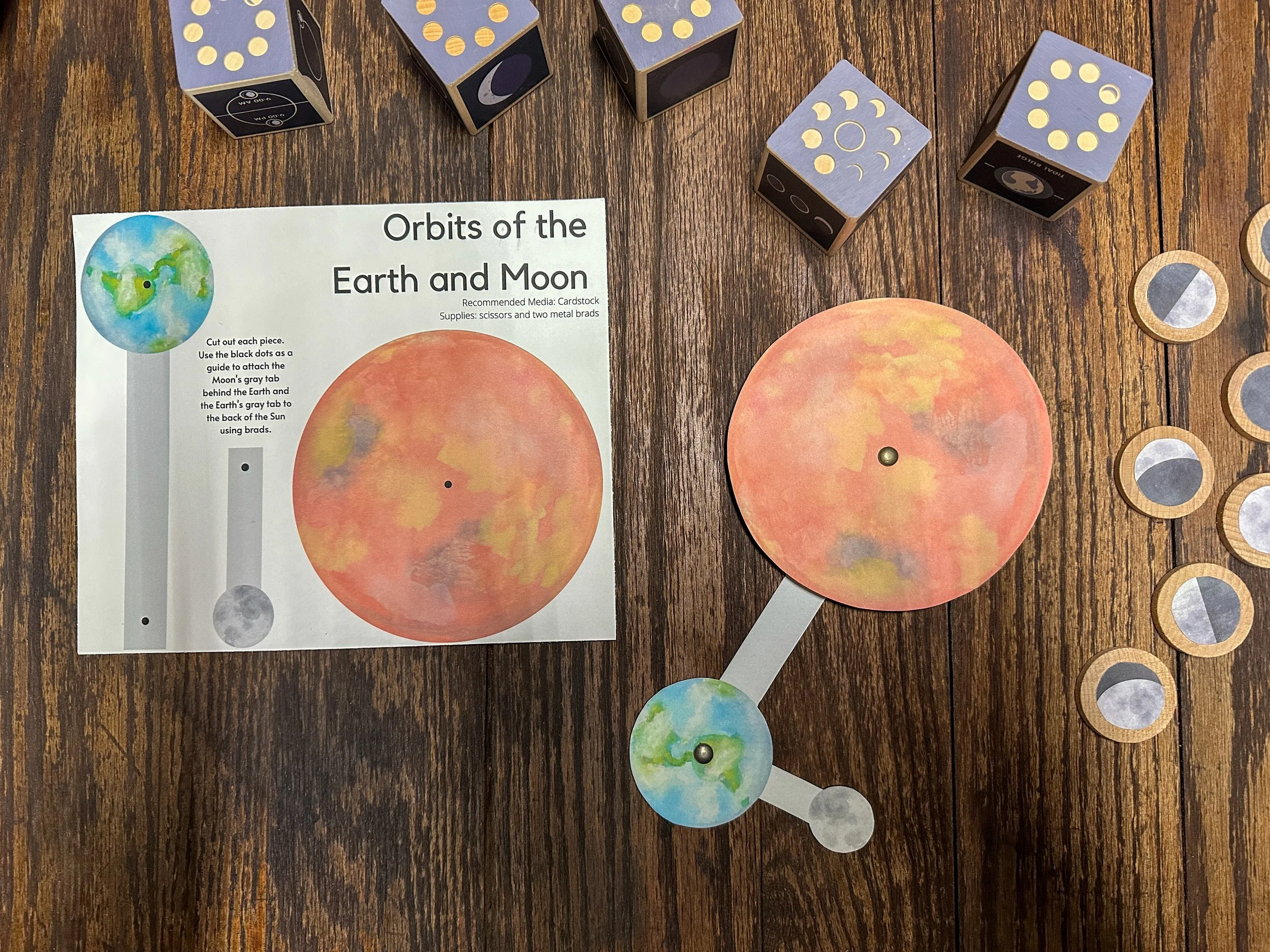
OK I’m going to get salesy—that's exactly why I created the Orbits of the Earth and Moon Project as part of the Moon and Phases Unit Study. It's a simple, hands-on model that lets kids physically move the Moon around the Earth and the Earth around the Sun. There's something about holding it in their hands and spinning those pieces that makes orbits real in a way that a picture in a book never quite does.
What Are Orbits? (The Easy Explanation)
Here's the simplest way I've found to explain orbits to your kiddos:
"The Earth is always moving in a big circle around the Sun. It takes one whole year to go all the way around. And while the Earth is doing that, the Moon is moving in its own circle around the Earth. The Moon takes about one month to go all the way around."
That's it. That's the core concept. You can build from there, but if a 3-year-old walks away understanding that the Earth goes around the Sun and the Moon goes around the Earth, I’m calling that a win.
For older kids (or curious adults), you can add:
The Earth doesn't just orbit, it also spins like a top. One full spin = one day and one night.
The Moon always shows us the same face because it spins at exactly the same speed it orbits.
Orbits aren't perfect circles, they're slightly oval-shaped (the fancy pants word is obviously "elliptical").
How to Make the Orbits Model
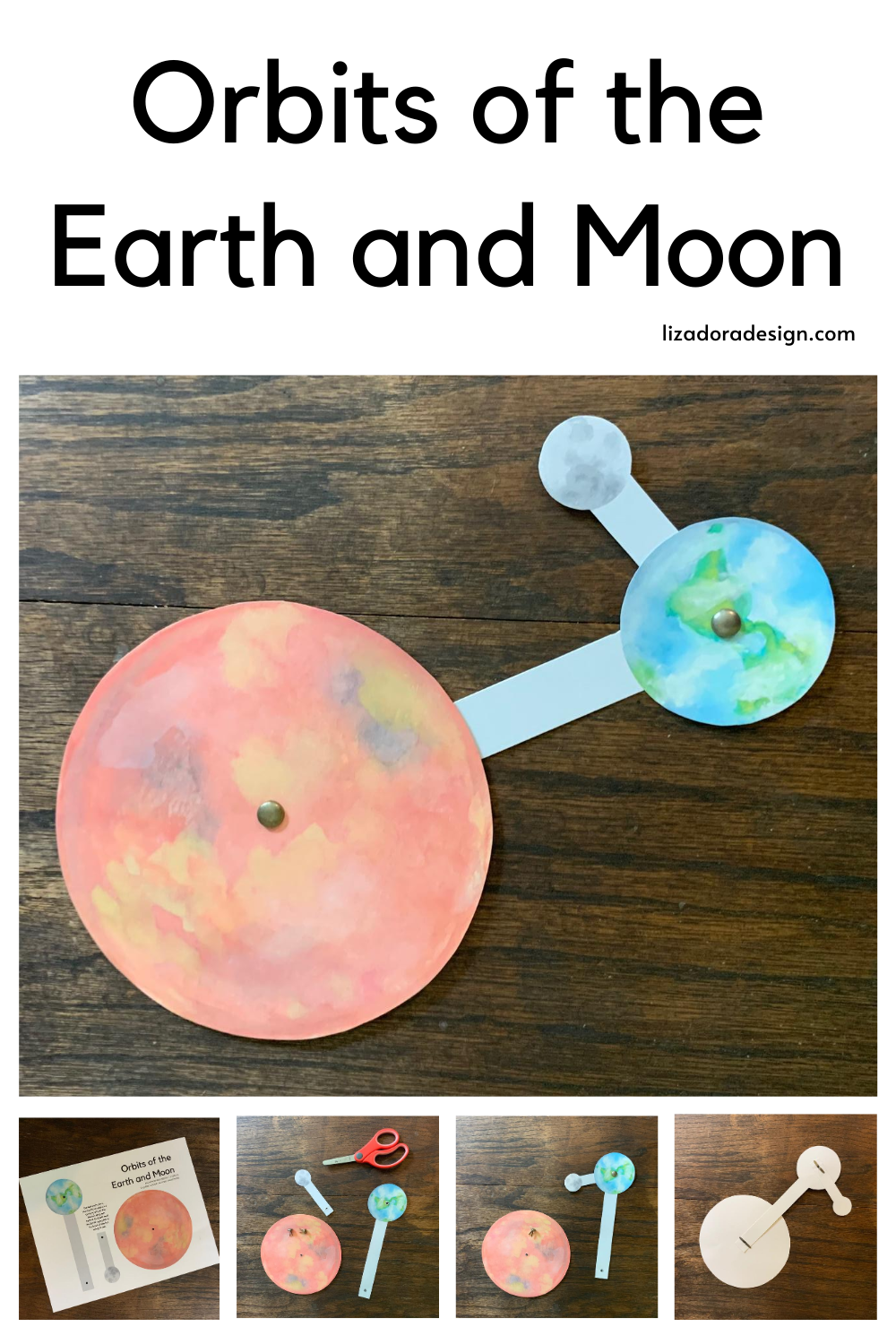
For this project you will need:
Brads (brass fasteners)
Cardstock
Orbits of the Earth and Moon Project Paper (available in the Moon and Phases Unit Study)
Scissors (affiliate)
Print out your project page on cardstock and then cut out the pieces, making sure to leave the gray strips attached. Using the tip of a pencil or your brad's pointed end, poke through the black holes as marked. Place the Moon orbit piece behind the Earth, stick the brad through, and open. Now take the Earth's orbit strip and place it behind the Sun. Secure with a brad and you're done!
Once it's assembled, let your child spin the pieces. Ask them questions while they play: "Which one is orbiting the Sun? Which one is orbiting the Earth? How long does the Moon take to go around?" This kind of guided play is where the real learning happens.
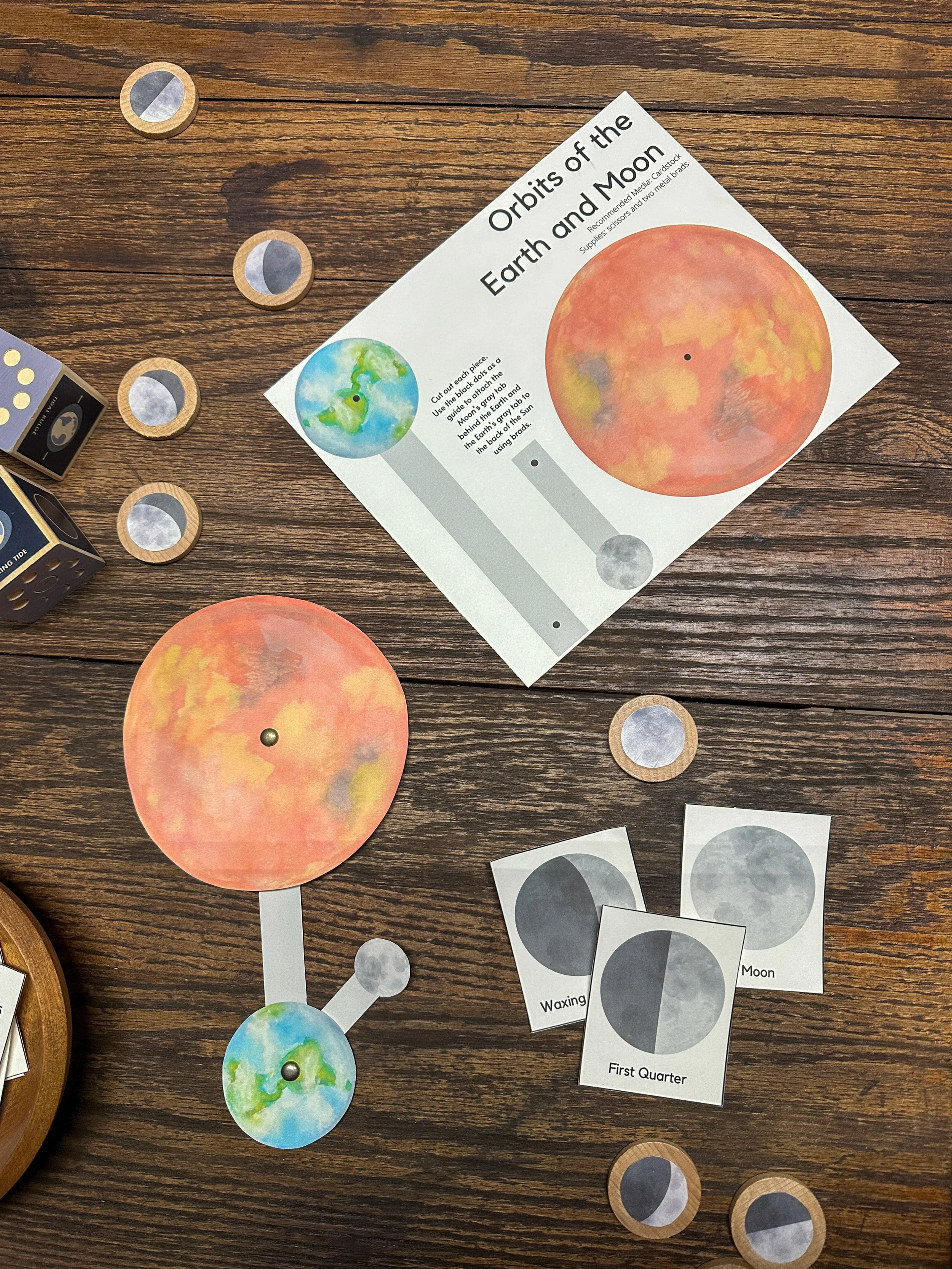
Why Orbits Help Kids Understand Moon Phases
Now here's where it gets really interesting, and kinda hard to explain.
The Moon doesn't make its own light. It reflects sunlight, just like a mirror. As the Moon orbits the Earth, we see different amounts of that reflected light depending on where the Moon is in its orbit. That's what creates the phases.
Here's a simple script you can use with kids:
"Imagine you're standing in the middle of a room with a lamp on one side. Now imagine a ball slowly moving in a circle around you. Sometimes the lamp lights up the whole ball that you can see. Sometimes it only lights up half. Sometimes the ball is between you and the lamp, and you can barely see any light on it at all. That's exactly what happens with the Moon."
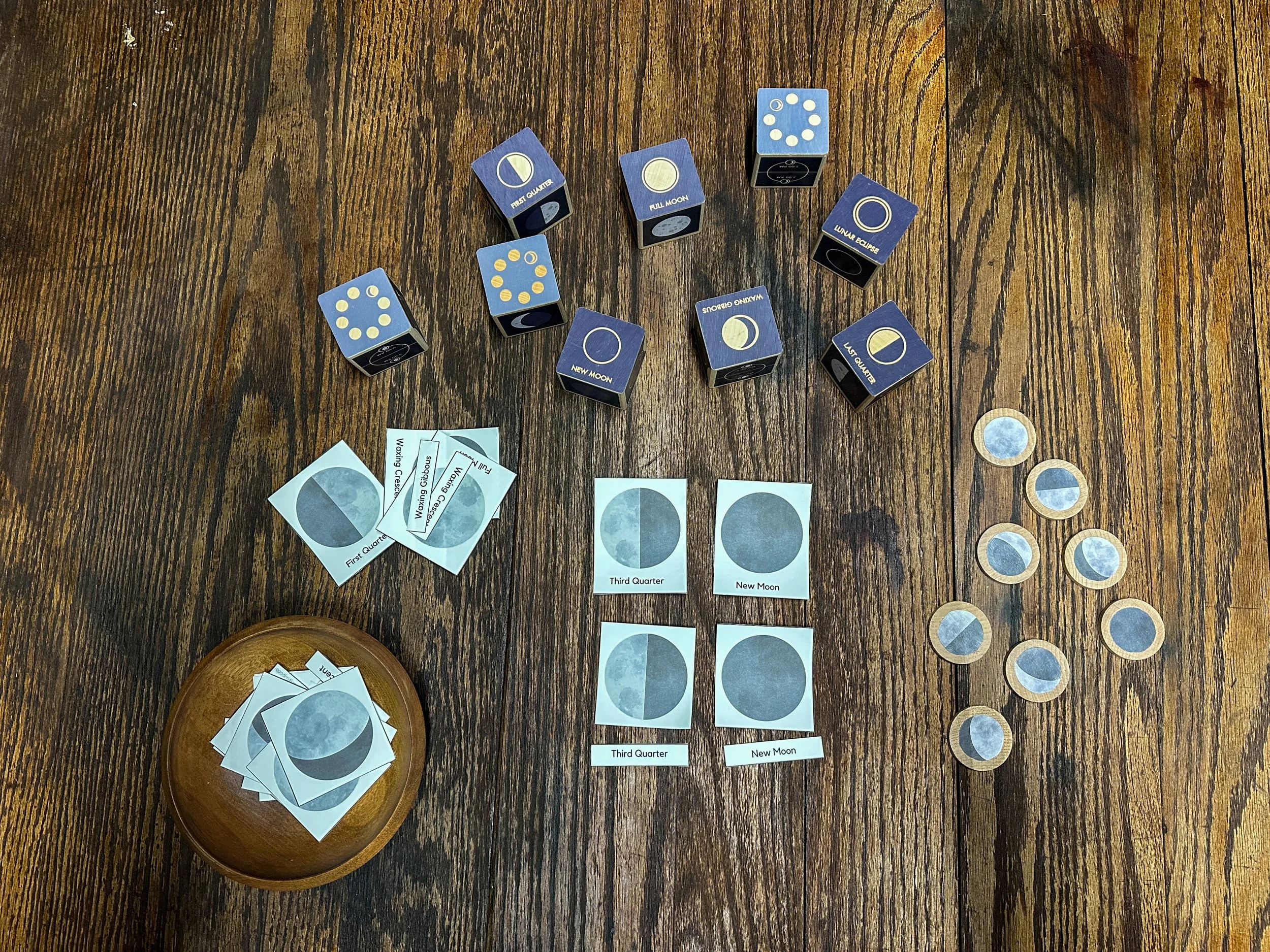
The eight phases (new moon, waxing crescent, first quarter, waxing gibbous, full moon, waning gibbous, last quarter, and waning crescent) are just different views of the same Moon as it makes its monthly trip around Earth.
For little learners, I like to simplify it even further: the Moon grows (gets bigger) and then shrinks (gets smaller) over about four weeks. New moon means "starting over."
Salesy again: The Moon and Phases Unit Study teaches phases six different ways because every kid learns differently. Some need to see it, some need to touch it, some need to track it over time. That's the Montessori approach: meet them where they are.
And Then There Are Eclipses
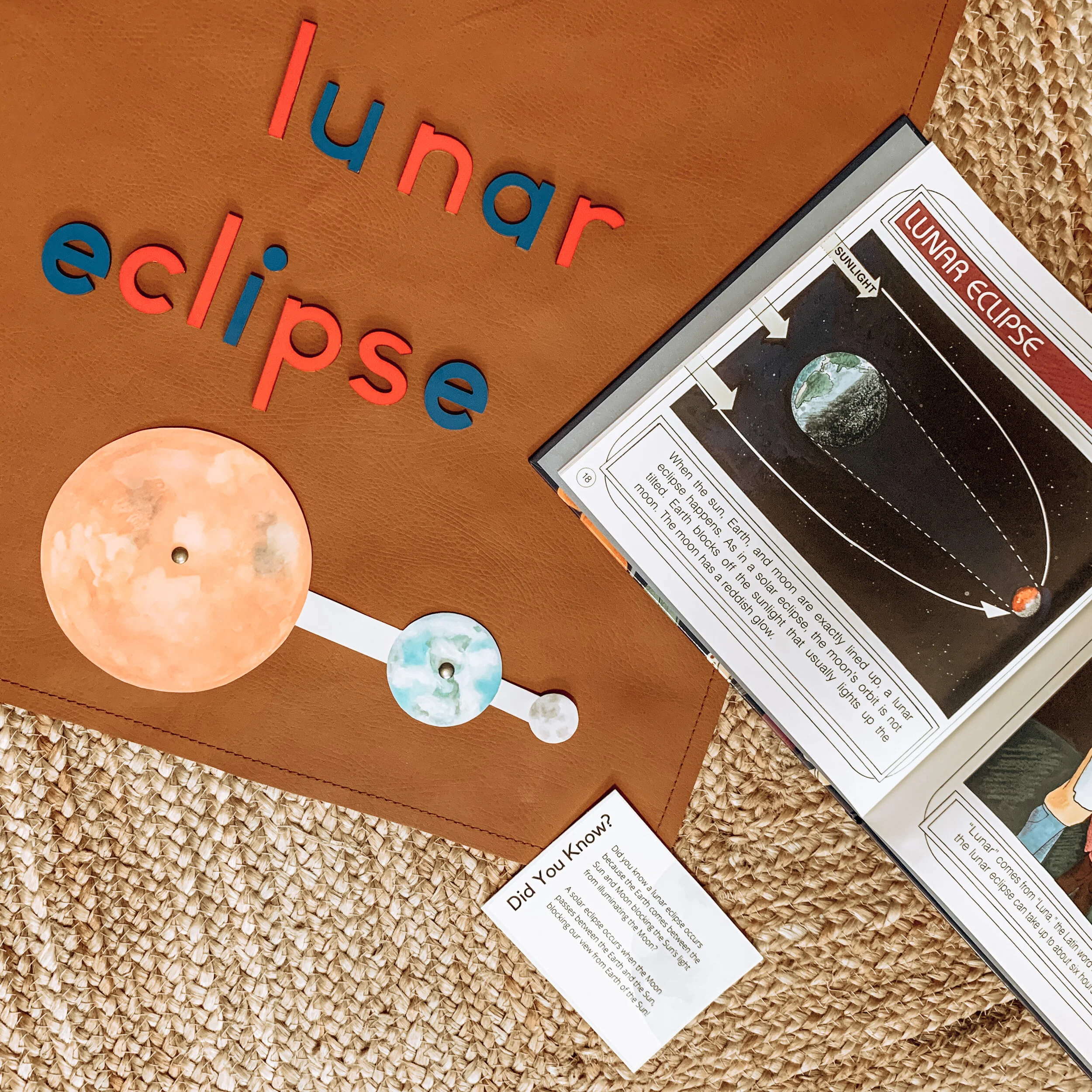
Once kids understand orbits, eclipses make perfect sense. An eclipse is just what happens when the Sun, Earth, and Moon line up in a very specific way.
A lunar eclipse is when the Earth passes between the Sun and the Moon, and Earth's shadow falls on the Moon. The Moon doesn't disappear—it actually turns a coppery reddish color (that's where "blood moon" comes from). This happens during a full moon.
A solar eclipse is the opposite. The Moon passes between the Sun and the Earth and blocks the sunlight. Even though the Moon is way smaller than the Sun, it's also way closer to us, so it can cover the Sun almost perfectly. This happens during a new moon.
The reason eclipses don't happen every single month is that the Moon's orbit is slightly tilted. Most of the time it passes just above or below that perfect lineup. When it does line up exactly, that's when we get the wow.
A simple way to explain it to kids:"An eclipse is when one space object's shadow falls on another. Sometimes the Earth makes a shadow on the Moon. Sometimes the Moon makes a shadow on the Earth."
More Hands-On Space Activities
If your child loved making the orbits model, there are so many ways to keep the momentum going:
Make play dough planets. Our Paint and Play Dough Planets activity is a free download that pairs perfectly with orbit learning. Kids paint and sculpt the planets, which reinforces the concept that these are real, physical objects moving through space.
Track the moon for a month. The Moon and Phases Unit Study includes a Lunar Cycle Tracking Chart. Every night (or morning…the Moon is often visible during the day too and then there’s no missed bedtimes!), have your child look at the Moon and shade in what they see. After a full month, they'll have watched an entire orbit happen in real time.
Read about it. The book pictured throughout this post is The Moon Book by Gail Gibbons (affiliate). It's a classic that covers moon phases, tides, the moon landing, and cultural history in mostly kid-friendly language. A great companion to any moon study.
Make a moon phase garland. We have a whole post on creating a Moon Phase Garland that makes a beautiful decoration and learning tool in one.
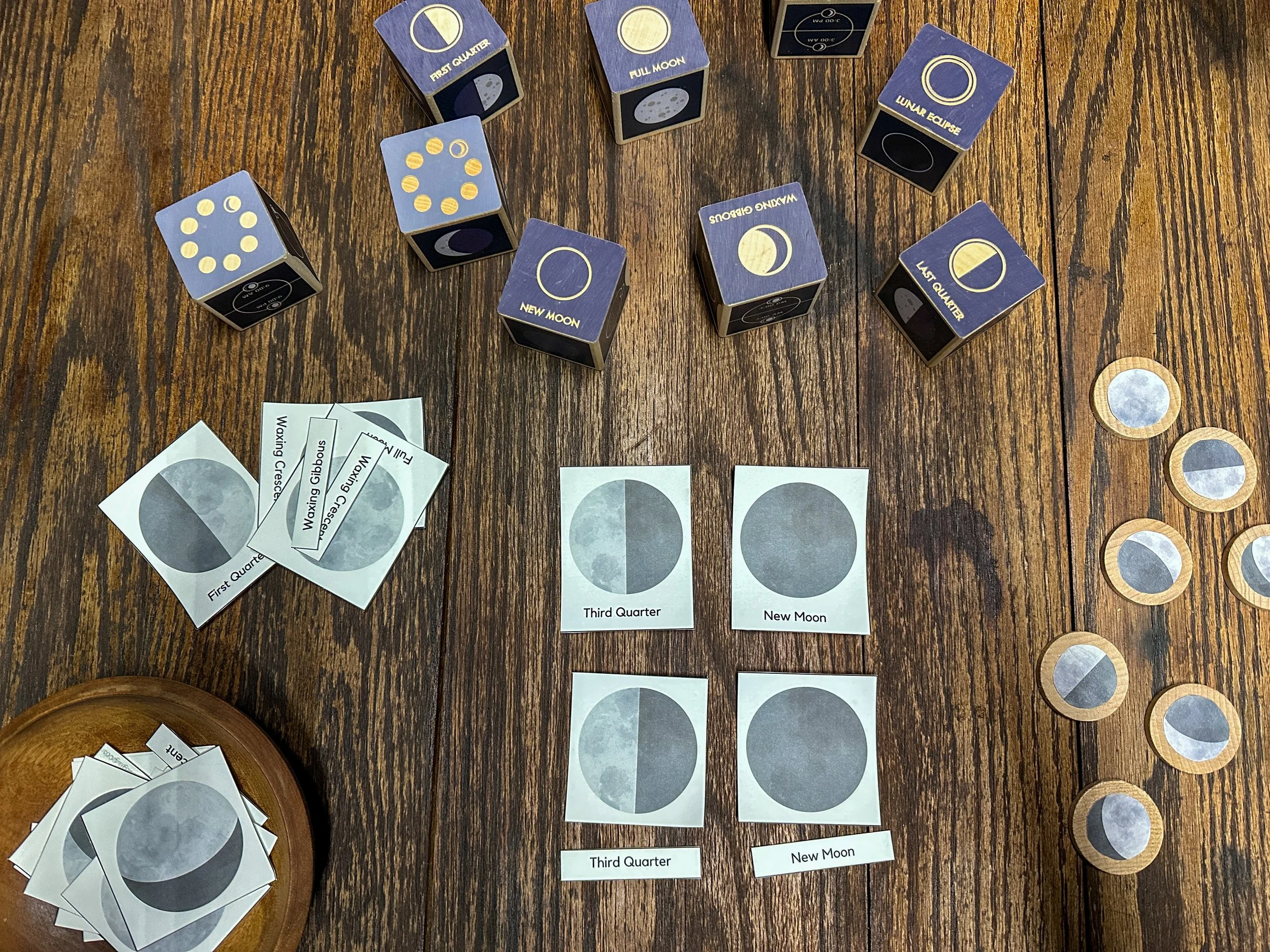
Try moon phase coins. Another hands-on option from our blog: Moon Phase Wooden Coins is a tactile Montessori-inspired activity.
I hope this helps you and your little learner make sense of orbits, moon phases, and eclipses. It really is one of those topics that just needs a hands-on visual “tool”.
Happy learning!
Liza
The Orbits of the Earth and Moon Project is part of the Moon and Phases Unit Study — 18 hand-painted watercolor activities covering moon phases, moon facts, math and patterns, literacy, and STEM. Ages 4–10.